Last Updated: November 12, 2026
Quick Summary
Professional chip seal maintenance services are the scheduled care that keeps a chip-sealed surface performing after installation: inspections, crack filling, spot repairs, sealcoat refresh, and drainage checks. Sticking to a predictable care schedule is what separates a surface that lasts from one that unravels. Maintenance money spent early protects the binder and aggregate you already paid for.
- Keep traffic off the new chip seal for the first 48 hours and avoid sharp turns.
- Sweep loose stone during weeks 1 to 4 to prevent aggregate loss.
- Schedule the first crack inspection at 3 to 6 months, then review the full surface annually.
- Evaluate a sealcoat refresh at year 5 or later to restore binder protection.
- Chip seals should not be used on pavements with structural distress, per the FHWA checklist.
Table of Contents
- What Professional Chip Seal Maintenance Services Actually Cover
- Chip Seal Pavement Maintenance: A Practical Care Schedule
- Chip Seal Driveway Repair: When Patching Beats Replacing
- What Professional Chip Seal Maintenance Services Cost
- How to Read Professional Chip Seal Maintenance Services Reviews
- Climate, Traffic, and Site Conditions That Change the Plan
- Request a Chip Seal Maintenance Quote from Global Paving
- Frequently Asked Questions
What Professional Chip Seal Maintenance Services Actually Cover
Professional chip seal maintenance services are the scheduled care that keeps a chip-sealed surface performing after installation: inspections, crack filling, spot repairs, sealcoat refresh, and drainage checks. The work starts with surface preparation and ends with uniform stone coverage locked into the binder.
From Surface Prep to Stone Coverage
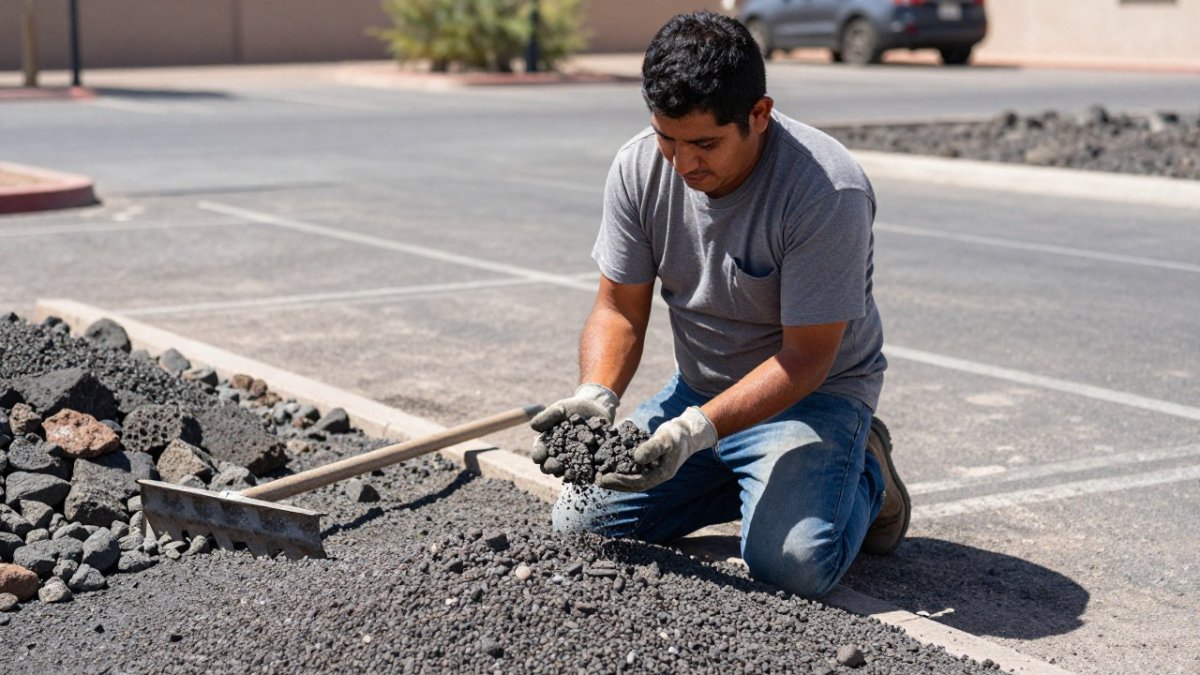
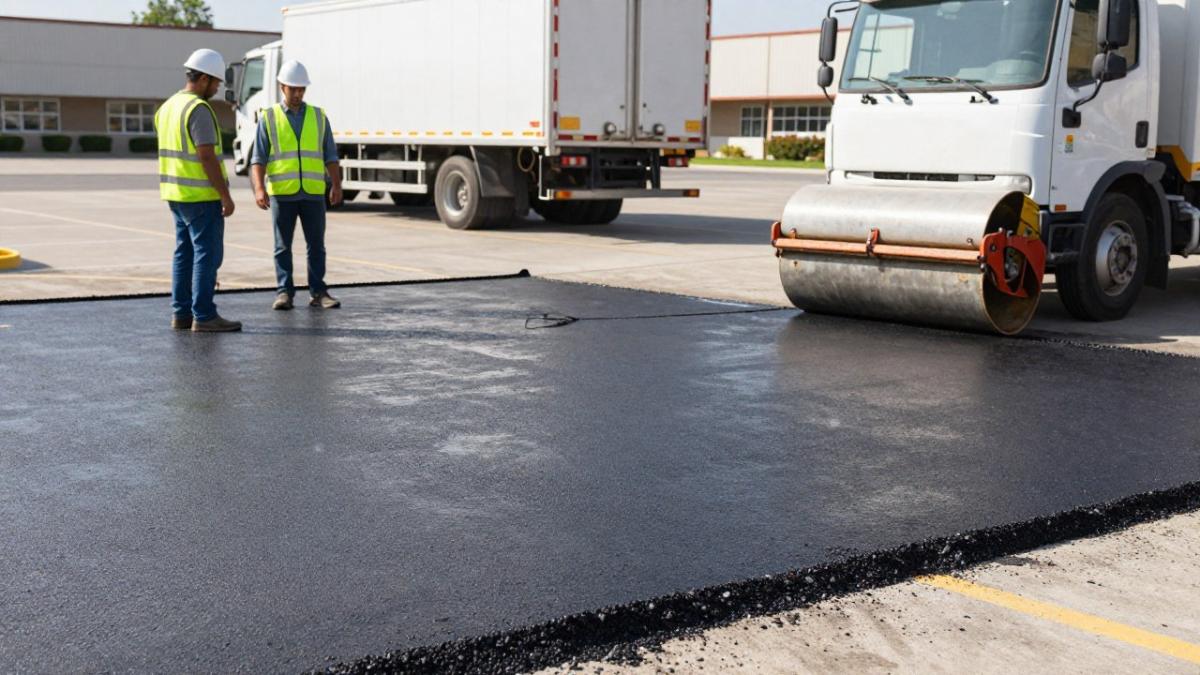
A proper chip seal application follows a defined sequence. Crews clean and repair the existing pavement, then apply hot liquid asphalt or asphalt emulsion as the binder. Stone chips are spread immediately and rolled into the binder before it cures. Maintenance services revisit each of those layers over time.
The National Center for Asphalt Technology’s chip seal manual trains agency staff to recognize exactly these maintenance needs. For the full scope of what a chip seal program involves, see our chip seal service page.
Chip Seal Pavement Maintenance: A Practical Care Schedule
Chip seal pavement maintenance follows a predictable calendar, and sticking to it is what separates a surface that lasts from one that unravels. Chip seal life depends heavily on the care it receives along the way.
The First 48 Hours and the First Year
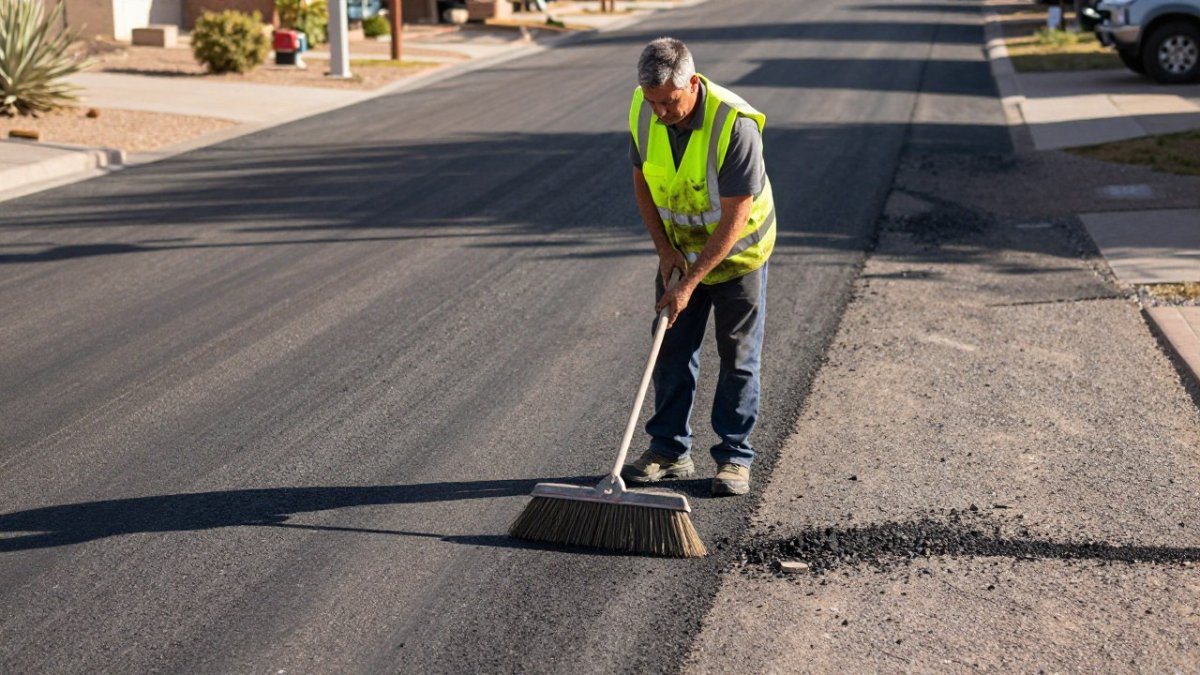
The first 48 hours decide whether the stone stays put. Keep vehicles off the surface, avoid sharp turns, and expect loose chips for a few weeks. Sweep excess aggregate rather than letting it wash into drains.
After that, the schedule looks like this:
| Timeframe | Maintenance Task | Why It Matters |
|---|---|---|
| First 48 hours | Keep traffic off, no turning | Binder needs to cure |
| Weeks 1-4 | Sweep loose stone, inspect | Prevents aggregate loss |
| Months 3-6 | First crack inspection | Catches early failures |
| Annually | Full surface review, crack fill | Extends service life |
| Year 5+ | Evaluate sealcoat refresh | Restores binder protection |
Chip Seal Driveway Repair: When Patching Beats Replacing
Chip seal driveway repair is usually the right call when damage is isolated, but full replacement wins once structural failure spreads. The dividing line is whether the distress sits in the surface or underneath it.
The Federal Highway Administration’s chip seal checklist is blunt on this point: chip seals should not be used on pavements with structural distress. A 2023 field-performance study reached a similar conclusion, finding that existing pavement condition and pretreatment significantly affect how well a chip seal performs. If your surface is alligator-cracked or rutted, patching over it wastes money.
For isolated potholes and cracks, our asphalt repair service handles the patching work that keeps a sound surface in service.
What Professional Chip Seal Maintenance Services Cost
Professional chip seal maintenance services cost varies with square footage, surface condition, prep work, and how much crack filling the job needs.
What Drives the Quote Up or Down
The biggest cost drivers are surface preparation and pretreatment. A 2023 field-performance study found both factors significantly affect chip seal performance, which is why skipping prep is a false economy. Traffic volume and the share of commercial vehicles also raise the spec, and the FHWA checklist advises limiting both for chip seal suitability.
Beyond prep, four variables move the number most:
- Square footage and geometry. Large, open lots price lower per square foot than tight driveways with islands, curbs, and gates that slow the distributor truck and roller.
- Crack and pothole volume. Widespread alligator cracking can signal a base problem that patching alone cannot solve.
- Aggregate and binder selection. Heavier truck traffic can call for a tougher aggregate and a different binder choice.
- Access and scheduling. Night work, occupied facilities, and phased lane closures add labor and equipment time that a vacant lot does not require.
Pricing depends on quantity, dates, and site conditions, so the honest answer is a site-specific quote. For quick answers on service details, our FAQs page covers the common questions before you request pricing.
Budgeting Maintenance Against Resurfacing and Replacement
A useful way to frame the decision is cost per year of service, not cost per job. Routine maintenance such as annual inspection, crack filling as needed, and a periodic sealcoat refresh can spread spending across the life of the surface. Resurfacing and full replacement involve larger expenditures, so the right balance depends on the surface’s condition.
The trade-off is straightforward: maintenance money spent early protects the binder and aggregate you already paid for, while deferred maintenance lets water into the base and converts a surface repair into a structural one. Ask any contractor to break a quote into prep, application, and follow-up so you can compare bids on the same scope rather than on the bottom line alone.
How to Read Professional Chip Seal Maintenance Services Reviews
Professional chip seal maintenance services reviews are useful only if you read them for the right signals. Star ratings tell you little; specifics about scheduling, prep, and follow-through tell you everything.
Look for reviews that mention:
- Whether the crew showed up on schedule and protected business operations
- How the contractor handled surface preparation and drainage
- Whether problems were fixed at the root or patched over
- How the company responded when something went wrong
A common mistake is weighing a single glowing review over a pattern. Read for consistency across many jobs. For more on vetting contractors, our blog walks through what to ask before you sign.
A Contractor Evaluation Checklist Beyond the Reviews
Reviews tell you how past customers felt; a checklist tells you whether the crew can do the work. Use both. Before signing, confirm the following:
- Surface preparation. The scope should state that the pavement will be cleaned, cracks filled, and failed areas patched before any binder is applied. A bid that skips prep is a bid for a surface that will unravel.
- Binder and aggregate specification. Ask which emulsion or hot asphalt will be used and what aggregate size and type are specified for your traffic load. The answer should match the site, not a one-size-fits-all default.
- Application sequence. Stone should be spread immediately behind the binder and rolled before cure. Ask how the crew handles rolling and whether a distributor truck and roller will be on site.
- Cleanup and curing guidance. The contract should cover sweeping of loose aggregate and written instructions on how long to keep traffic off the surface.
- Insurance and licensing. Request a certificate of insurance and confirm the contractor is licensed to operate in your jurisdiction.
- Written scope and change orders. Everything discussed should appear in writing, including what happens if unforeseen base damage is found.
A low bid that omits prep, specifies a generic aggregate, or offers no written scope may shift risk onto you. Compare bids line by line against this checklist, and treat any contractor who resists putting the scope in writing as a warning sign.
Climate, Traffic, and Site Conditions That Change the Plan
Climate, traffic, and site conditions reshape every chip seal maintenance plan. Heat, heavy vehicles, and drainage all shorten the interval between treatments, and a plan built for a quiet driveway fails on a distribution-center lot.
In hot climates, binder can soften under load, so heavy-truck traffic demands a tougher aggregate and closer inspection schedule. Poor drainage concentrates water at the surface and speeds wear. The FHWA checklist’s caution about structural distress and commercial-vehicle volume applies directly here.
Request a Chip Seal Maintenance Quote from Global Paving
The gap between a chip seal that lasts a decade and one that fails in three years is almost always maintenance. Global Paving brings over two decades of experience to commercial, industrial, and HOA properties across the Greater Phoenix area. We focus on transparent communication and no high-pressure sales, and aim to minimize disruption to your business.
Get started with Global Paving and protect your asphalt with a maintenance plan built for your surface. Reach the team through our contact page to request your quote.
Ready to stop guessing about your pavement? Reach out and we will assess your surface and outline a maintenance schedule that fits your property and your budget.
Frequently Asked Questions
What maintenance does a chip seal surface need?
A chip seal needs loose-stone sweeping in the first weeks, annual crack filling, and spot patching where stone has worn away or binder has failed. Most surfaces benefit from a fog seal or rejuvenator every few years to refresh the binder. A 2023 field-performance study found that existing pavement condition and pretreatment significantly affect how well a chip seal holds up, so maintenance should start with an inspection of the base surface rather than a fixed checklist.
How often should chip seal pavement be maintained?
Plan on a light inspection each spring and fall, crack filling as needed, and a full condition review every two to three years. Most owners will face one or two rounds of preventive work over the life of a chip seal. Parking lots and roads with heavy truck traffic should be checked more often because wear accelerates under load.
How much do professional chip seal maintenance services cost?
Pricing depends on square footage, surface condition, pretreatment needed, and how much traffic the area carries, so a quote is the only reliable number. Ask whether the quote covers surface preparation, emulsion application, stone chips, sweeping, and any crack filling or patching. For pricing specific to your site, request a quote from Global Paving through our website.
Can you sealcoat a chip seal driveway?
Sealcoating over chip seal is possible but not always the right move. A fog seal, which is a diluted asphalt emulsion, is the more common choice because it refreshes the binder without filling the textured surface that gives chip seal its grip. A full sealcoat can smooth over the stone and reduce traction. Ask the contractor which product suits your surface, and confirm it is compatible with the original binder before approving the work.