Last Updated: November 26, 2026
Quick Summary
Chip seal curing in a commercial parking lot typically needs about 24 to 48 hours before light vehicles can park, but the exact time depends on weather and material. Heavier vehicles usually need 48 to 72 hours. Cool, wet, or shaded conditions push the timeline out.
- Keep all vehicles and foot traffic off the surface for the first 24 hours.
- Light vehicles may park between 24 and 48 hours, depending on conditions.
- Heavier vehicles and delivery trucks usually need 48 to 72 hours.
- Drying is not the same as curing; a surface can feel dry while still curing.
- Confirm the timeline with your contractor on the day of the job.
Table of Contents
- How Long Does Chip Seal Take to Cure in a Parking Lot?
- Drying Versus Curing: What the Difference Means for Reopening
- When Can You Drive on Chip Seal?
- Factors Affecting Cure Time: Weather, Traffic, and Temperature
- Chip Seal Loose Gravel Cleanup and Traffic Control During Curing
- Chip Seal vs. Asphalt Parking Lot: Why Curing Differs
- Planning Your Parking Lot Reopening With Global Paving
- Frequently Asked Questions
How Long Does Chip Seal Take to Cure in a Parking Lot?
Chip seal curing in a commercial parking lot typically needs about 24 to 48 hours before light vehicles can park on it, but the exact time depends on weather and material. WSDOT chip seal guidance on curing time
Curing is not a fixed clock. Heavier traffic and cooler or wetter conditions push the timeline out. Warm, dry days move it along.
Here is a simple way to think about the timeline:
- First 24 hours: Keep all vehicles and foot traffic off the surface.
- 24 to 48 hours: Light vehicles may be able to park, depending on conditions.
- 48 to 72 hours: Heavier vehicles and delivery trucks usually need more time.
Confirm the timeline with your contractor on the day of the job rather than relying on a generic number.
Drying Versus Curing: What the Difference Means for Reopening
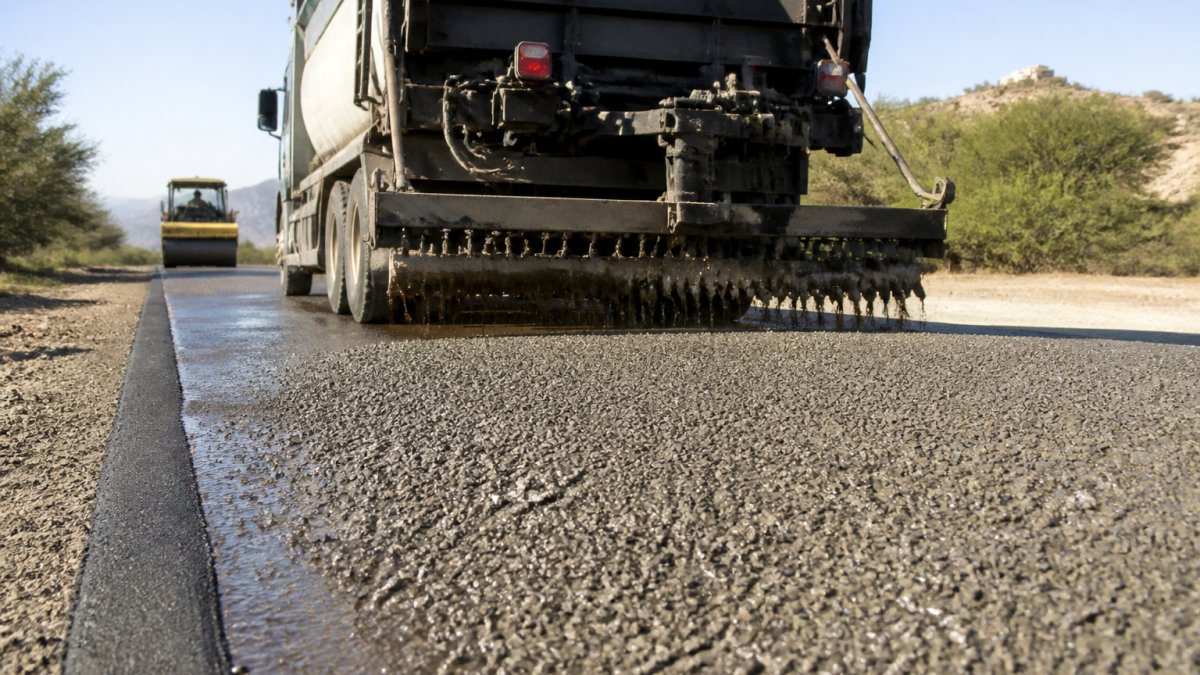
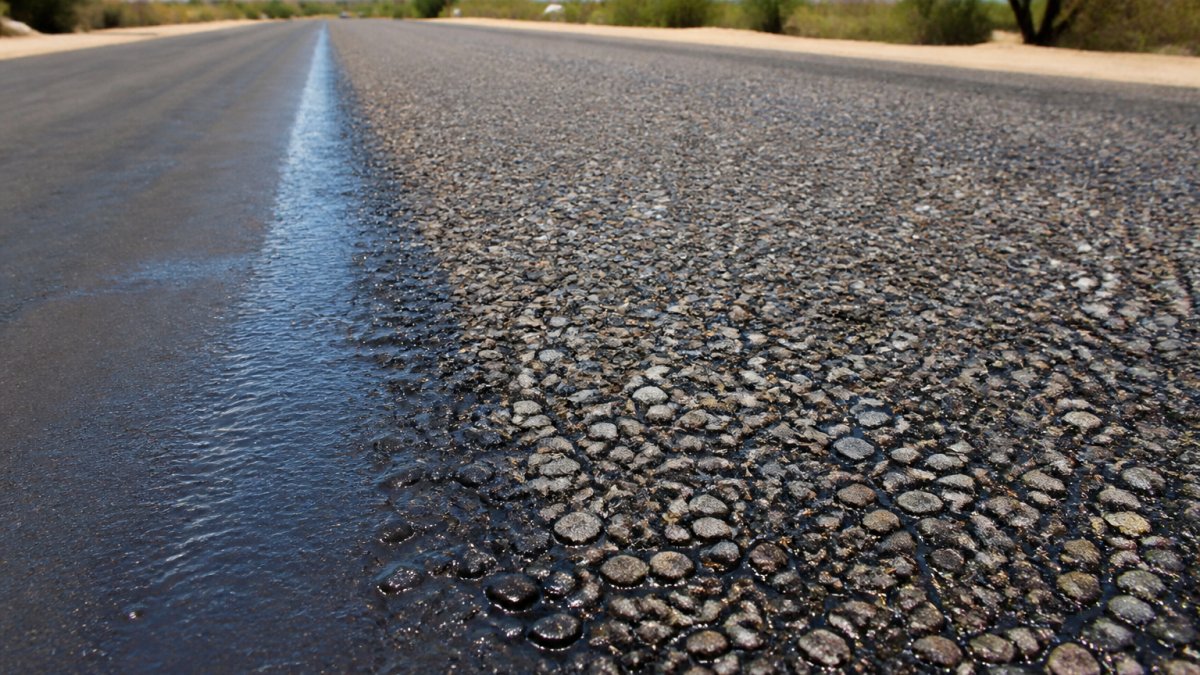
A surface can feel dry and still be curing. Drying is the loss of surface moisture. Curing is the slower process where the binder hardens and bonds the chips to the base.
Reopening too early is the most common mistake. Loose chips can scatter under tires and damage vehicles. The supplied research also notes that unbound chips can cause vehicle damage and premature failure when traffic arrives too soon. Rajagopal report on chip sealing limitations
When Can You Drive on Chip Seal?
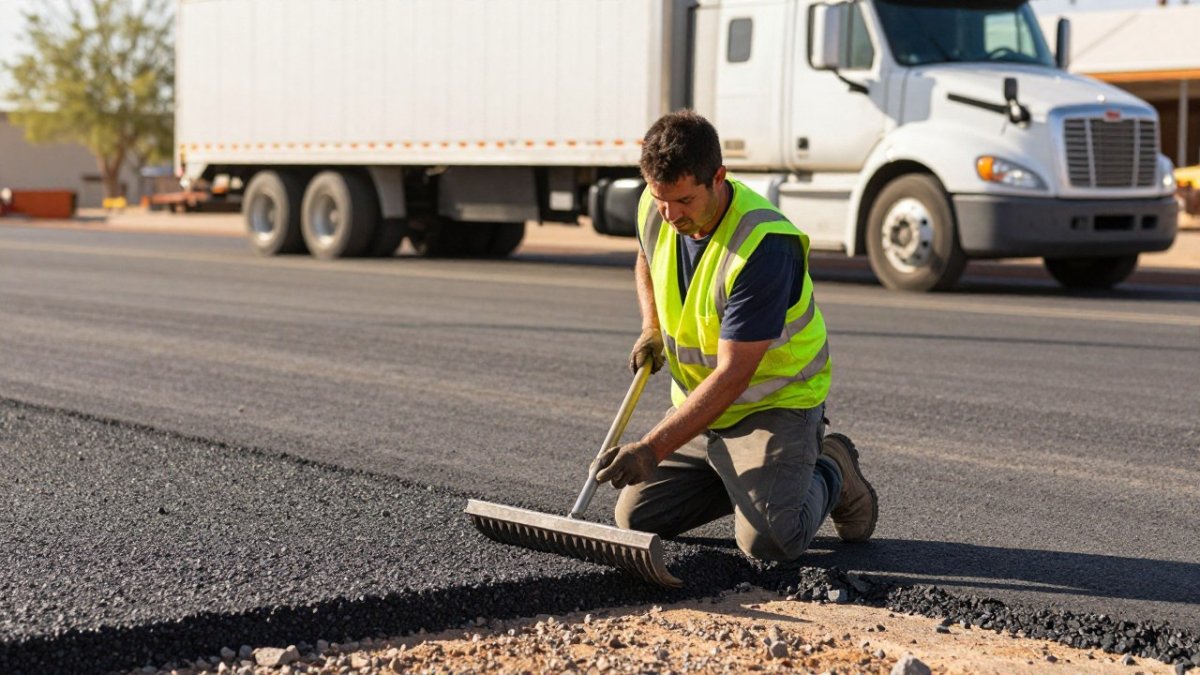
Driving on a new chip seal surface should wait until the surface no longer releases loose stone and the binder has set. Many property managers ask for a firm date, but the safest answer is a readiness check.
Global Paving’s chip seal service overview covers how we confirm readiness before a lot reopens. For detailed timing guidance on driving after sealing, read our full guide on when you can drive on chip seal.
Factors Affecting Cure Time: Weather, Traffic, and Temperature
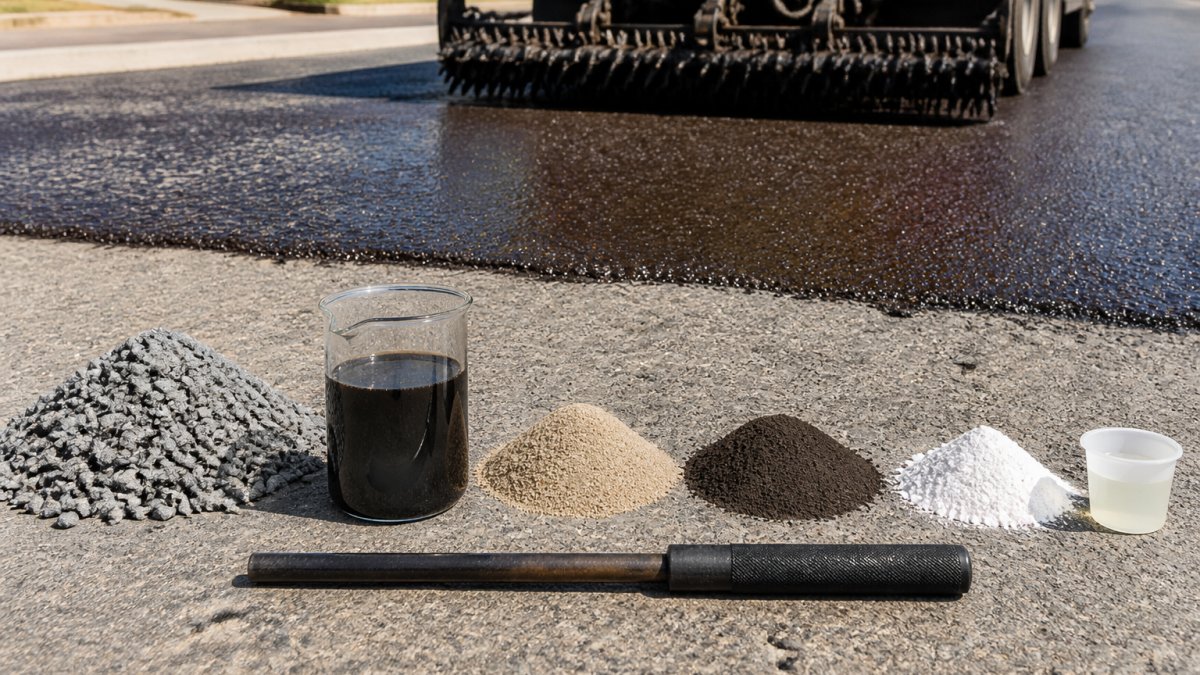
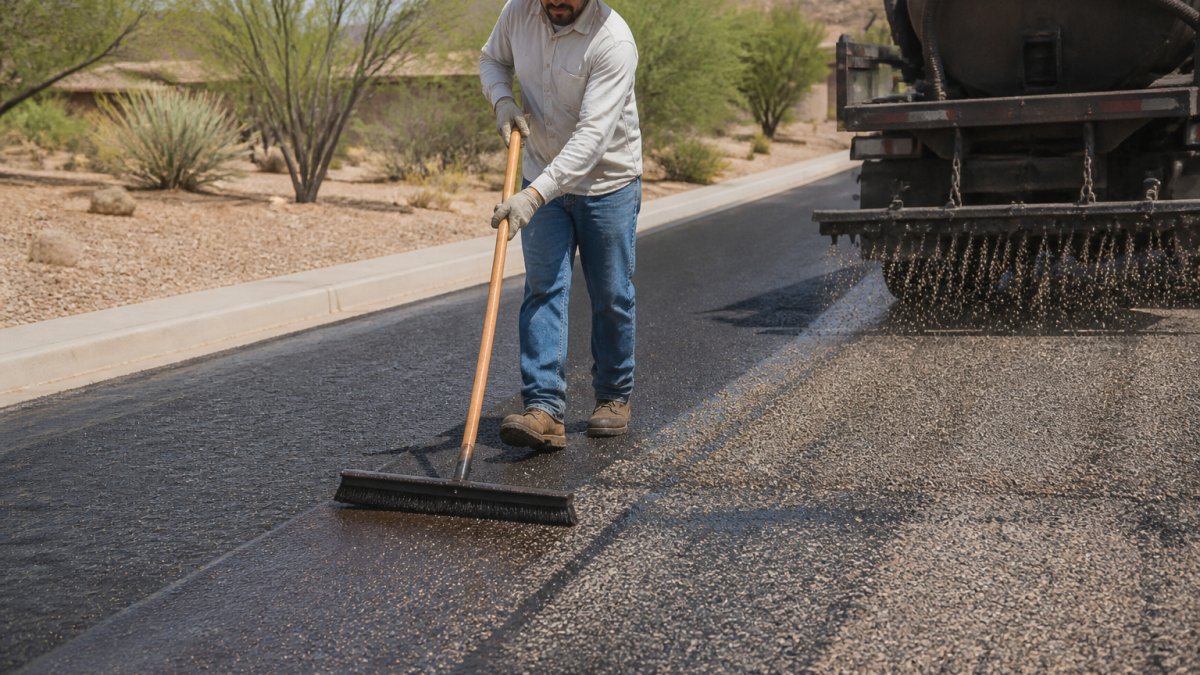
Weather is a major variable in chip seal curing. The binder in a chip seal is an asphalt emulsion that must break before the film develops enough cohesion to hold aggregate under tire stress. Temperature, humidity, wind, shade, and rainfall each affect that process.
Temperature. Warm air and warm pavement speed emulsion breaking and binder hardening. Cool temperatures slow both, and once overnight lows drop toward the range where emulsion chemistry stalls, curing can effectively pause until the surface warms again.
Humidity and dew. High humidity slows water evaporation from the emulsion, extending the break period. Heavy overnight dew can re-wet a surface that appeared firm the previous evening, so a lot that passed a readiness check at 4 p.m. may need rechecking at 7 a.m.
Wind and shade. Breezy, sunny conditions accelerate drying; buildings, trees, and parked equipment that shade part of a lot create microclimates where curing lags the open areas. Property managers should expect shaded stalls and north-facing edges to remain tender longer than the sun-exposed center of the lot.
Rainfall. Rain on a fresh chip seal is the highest-risk weather event. Rain before the emulsion has broken can wash binder off the aggregate and leave a dusty, under-bound surface; rain after break is less damaging but still slows full cure. If rain falls within the first day, the lot should be re-inspected before any traffic returns.
Traffic. Traffic affects curing in two ways. First, tires applied before the binder has developed cohesion can pick up binder and displace chips, which both damages the surface and transfers tacky material to vehicles. Second, even light traffic early in the cure window can polish or reorient aggregate before it is locked in. Heavier vehicles, delivery trucks, garbage trucks, and tractor-trailers, concentrate stress at the tire contact patch and should be held back longer than passenger cars.
A practical weather-adjusted approach for a commercial lot is to treat the base timeline as a starting point and then add caution for cool, humid, shaded, or wet conditions rather than subtracting time for ideal weather. A lot sealed in cool, damp conditions generally needs a longer hold before heavy vehicles than one sealed in hot, dry weather.
Before planning your reopening schedule, review our guide on weather conditions for commercial chip sealing.
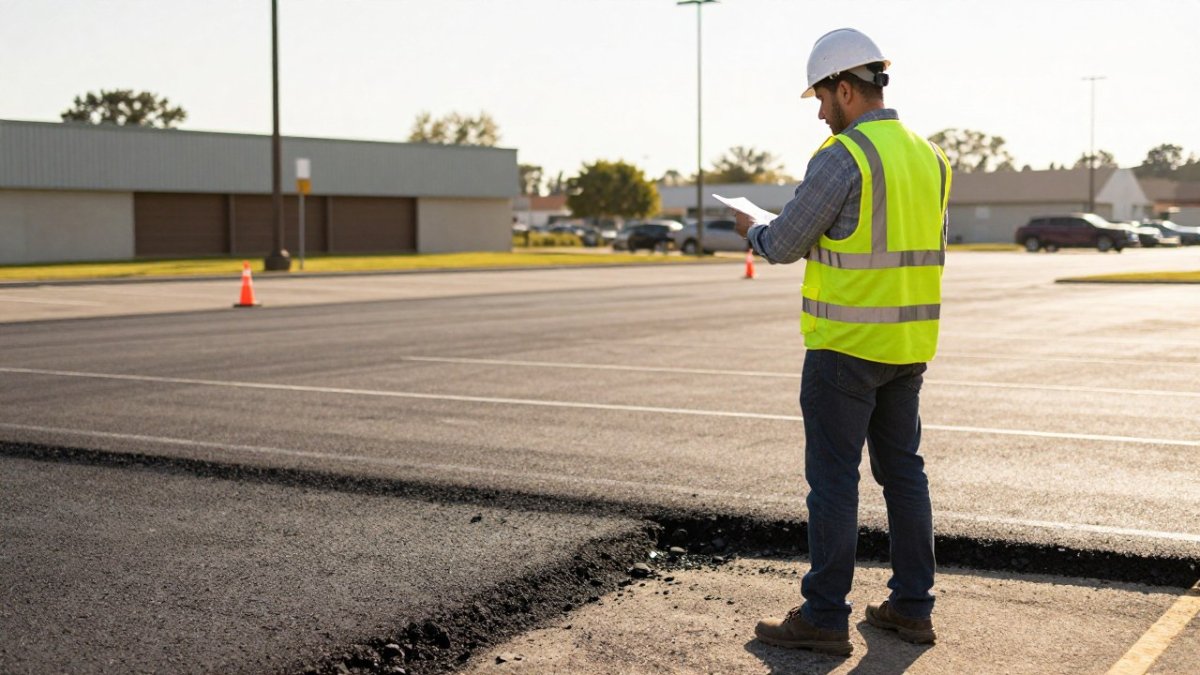
A property manager should also inspect the lot in the morning sun. Look for loose aggregate, soft spots, and tackiness that transfers to a shoe or tire.
The man is American.
Watch out: a lot that looks dry at midday can still be tender after a cool, humid night, so the morning recheck matters more than the afternoon impression.
Chip Seal Loose Gravel Cleanup and Traffic Control During Curing
Loose gravel is the most visible sign that a chip seal is still curing, and managing it is where a commercial lot differs most from a driveway. A parking lot has stalls, entrances, drive aisles, delivery zones, and pedestrian paths that all reopen on different schedules, so a single “lot closed” sign is rarely enough.
Phased reopening plan. A practical sequence for a commercial lot is:
- Keep the entire lot closed during the initial binder break. No vehicles, no pedestrians, no carts.
- Reopen the drive aisles and main entrance first once the surface passes a readiness check, keeping stalls closed with cones or barricade tape.
- Reopen light-vehicle stalls next, starting with the sun-exposed areas and holding shaded stalls longer.
- Reopen heavy-vehicle and delivery zones last, after the binder has had additional time to harden under the concentrated load of trucks.
- Reopen pedestrian paths and accessible routes only after loose aggregate has been swept and the surface is stable under foot.
Readiness checks for property managers. Before reopening any area, walk it and check four things: loose aggregate that kicks up under a shoe; binder tackiness that transfers to a shoe or tire; soft or spongy spots; and surface stability under a slow vehicle pass. A lot that fails any of these checks should stay closed in that area.
Traffic control and occupant communication. Barricades and cones should be placed at every entrance, not just the main one, because drivers will find secondary access. Temporary signage should state the expected reopening window and direct drivers to alternate parking. For tenants and employees, a short notice covering the closure dates, alternate access, and delivery scheduling prevents most conflicts. Delivery and service providers, trash haulers, food distributors, and maintenance vendors, should be rescheduled or redirected during the cure window, and emergency access routes should be confirmed with the local fire authority before the lot closes.
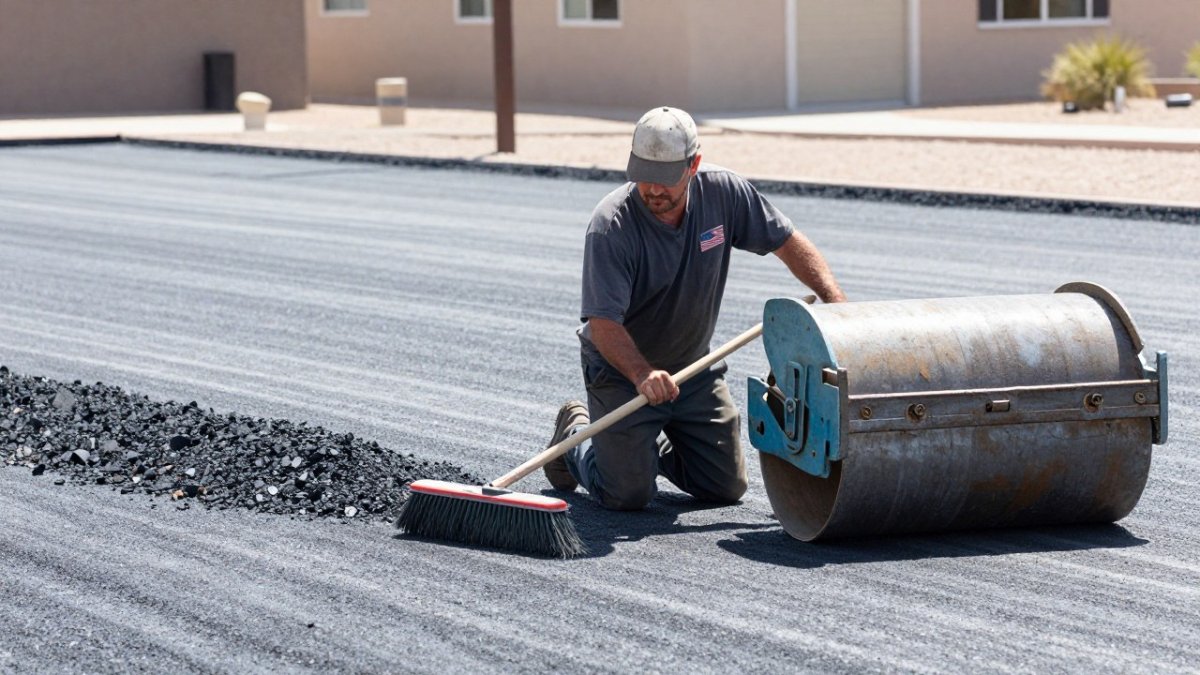
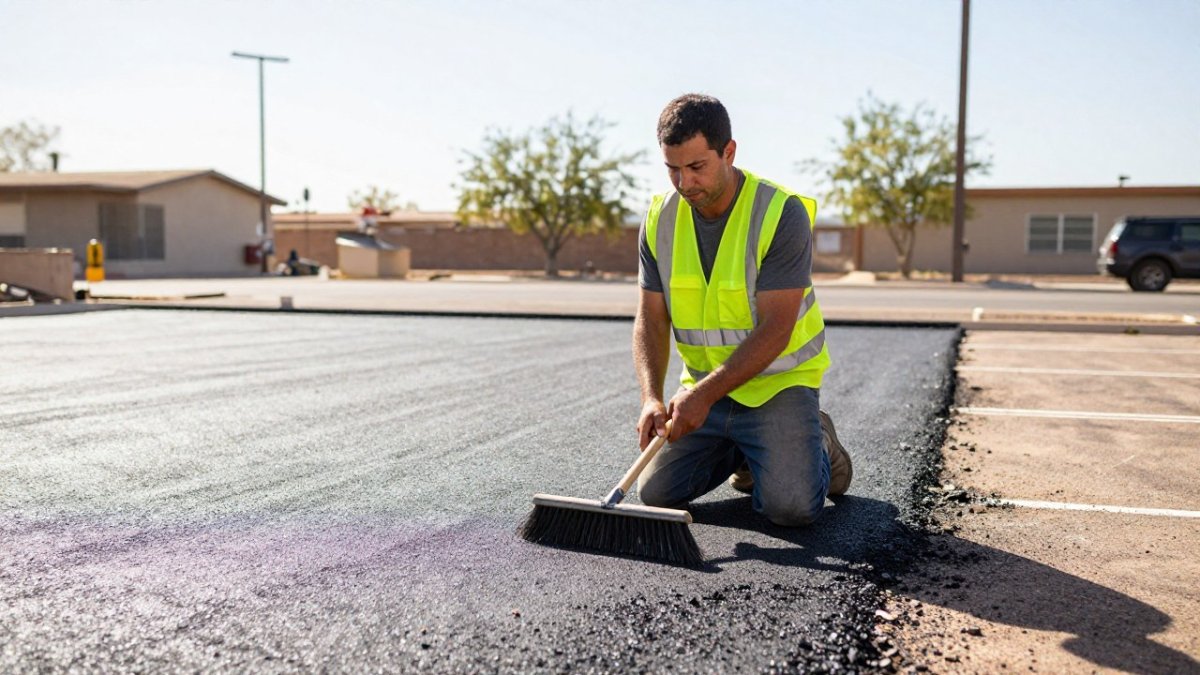
Loose-stone management. Some aggregate movement is normal during curing, especially in the first few days. Sweeping or redistributing loose chips after the surface firms helps prevent them from being carried onto adjacent pavement and into storm drains. Loose stone usually diminishes over the first week or two; loose stone that persists or increases after that window can indicate under-bound aggregate or a binder problem and should be evaluated before the lot is fully reopened.
Keep the cleanup simple:
- Block off the lot with cones and temporary signs at every entrance.
- Sweep loose chips after the surface firms.
- Recheck the lot before reopening spaces.
- Keep the area closed to heavy traffic until the surface is firm.
For a full method, see our guide on preventing loose gravel on chip seal.
Watch out: sweeping too early, before the binder has broken, can dislodge chips that would otherwise have seated, so confirm the surface has firmed before the first sweep.
Chip Seal vs. Asphalt Parking Lot: Why Curing Differs
Chip seal and asphalt cure differently. Asphalt is a hot-mix product that hardens as it cools. Chip seal relies on an emulsion or binder that must break and set around the aggregate.
Because of that, a chip seal lot often needs more caution during the first days, even when a newly paved asphalt lot may look ready sooner. Do not assume one timeline fits both materials.
Planning Your Parking Lot Reopening With Global Paving
A good reopening plan balances safety, business needs, and occupant communication. Global Paving works with property managers to set a schedule that fits your operations, then confirms the surface is ready before cars return.
Start by reviewing our chip seal services and our full range of services. When you are ready to plan, contact Global Paving for a site-specific timeline. Pricing depends on lot size, scope, and scheduling, so request a quote for current figures.
Frequently Asked Questions
How long does it take for chip seal to cure?
Curing time varies with weather, material, and traffic. WSDOT notes curing can require up to two days, Larimer County gives 24 to 48 hours depending on weather, and Caltrans reports polymer-modified emulsion seals take several hours to tolerate unrestricted traffic, depending on climate. Because these figures come from roads rather than parking lots, confirm the timeline with your contractor before reopening the lot to vehicles.
Is it okay if it rains 24 hours after sealing a parking lot?
Rain within the first day can disturb a chip seal before the binder has set, which can wash out emulsion or displace aggregate. Rain after the surface has begun to cure is less damaging but can still affect appearance and loose stone. Ask your contractor whether the surface has reached a stable condition, and keep vehicles off until it has, especially if rain is forecast in the coming days.
What happens if cars drive on chip seal too soon?
Vehicles driving on a chip seal before it cures can pick up loose aggregate, cause tire tracking, and displace chips before they bond. Early traffic can also leave scuffing or raveling that may require repair. Keep the lot closed to parking and through traffic until the surface is stable, and use cones and signage to enforce the restriction.