Last Updated: November 22, 2026
Quick Summary
Chip sealing can proceed only in warm, dry weather with air and pavement temperatures meeting the binder’s minimum and holding steady or rising. Rain before or during the curing window is a hard stop, and hot, dry conditions speed curing.
- Check both air temperature in the shade and surface temperature on the pavement before spraying.
- Minimum temperature thresholds vary by binder type, so confirm the applicable agency specification.
- Avoid starting late in the day when temperatures are falling toward overnight cold curing.
- Check the forecast for the full curing period, not just the spray day, to avoid rain on fresh emulsion.
- Curing can take up to two days, with hot, dry weather speeding the process.
Table of Contents
- Why Weather Decides When Commercial Chip Sealing Can Proceed
- Chip Seal Temperature Requirements: Air Versus Pavement Readings
- Chip Seal Rain Requirements and Forecast Windows
- Humidity, Wind and Evaporation in Combination
- Chip Seal Curing Time and Reopening to Traffic
- Chip Seal Application Checklist: Go and No-Go Conditions
- Scheduling Your Next Commercial Chip Seal Project
- Frequently Asked Questions
Why Weather Decides When Commercial Chip Sealing Can Proceed
Weather is the single biggest factor in whether a chip seal succeeds or fails. The Minnesota Department of Transportation notes in its Seal Coat Handbook that chip seals are strongly affected by weather during construction, and it describes a warm, sunny day with low humidity as ideal (Minnesota Seal Coat Handbook). At Global Paving, we plan every commercial chip seal job around these conditions, because a seal laid on the wrong day can lose chips within months.
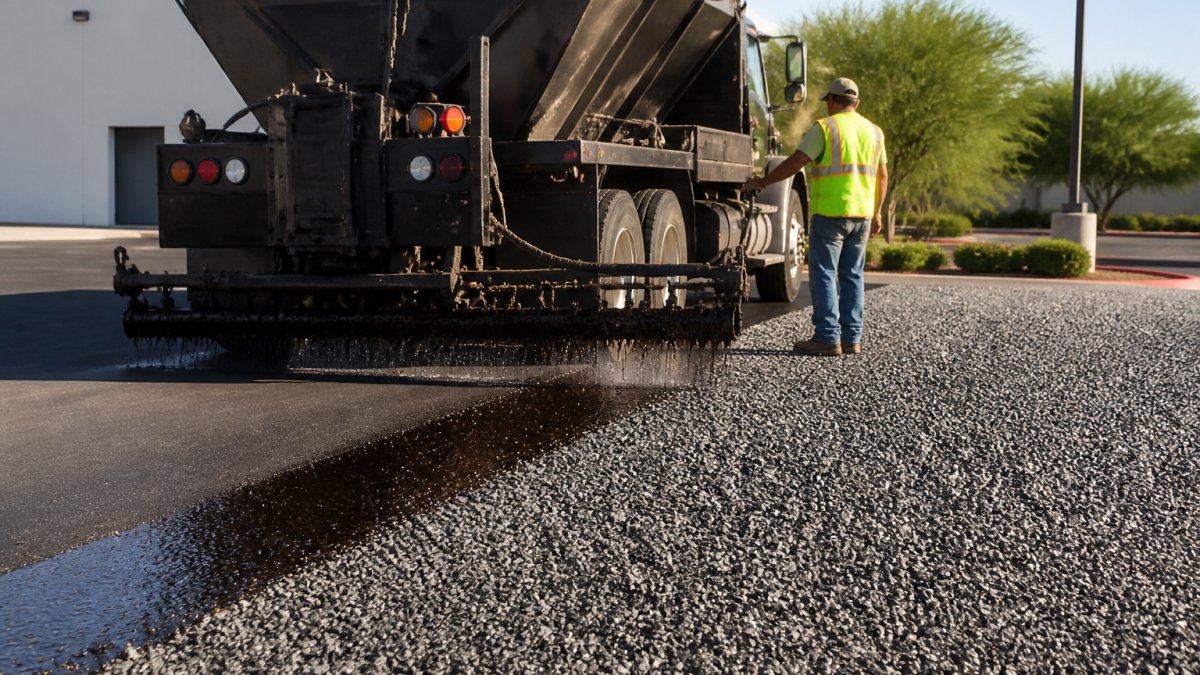
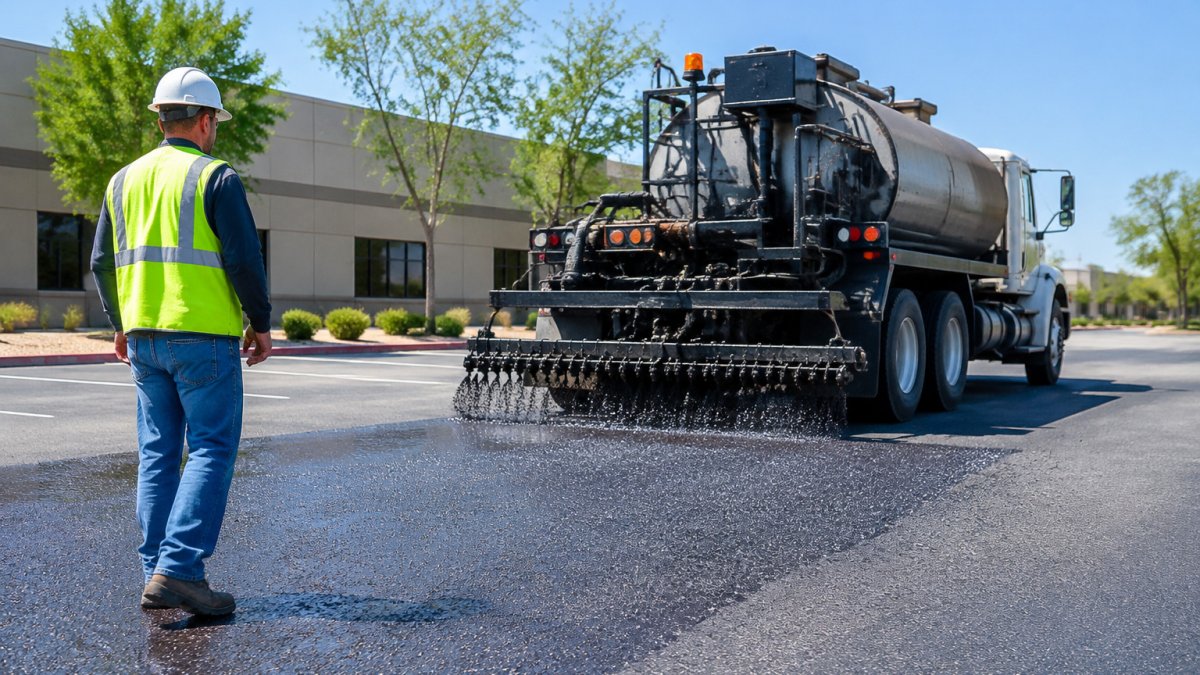
Chip sealing is a surface treatment. Hot asphalt emulsion is sprayed onto the pavement, and stone chips are rolled into it. The emulsion has to break, cure and bond before traffic can roll over it. Weather controls each of those steps.
Here is what the research points to:
- Temperature affects how the emulsion sets.
- Humidity and wind affect how fast water leaves the surface.
- Rain can wash out fresh emulsion and loosen the chips.
- Time of year shapes the forecast window you have to work with.
A Purdue University study on chip-seal curing found that temperature, wind speed, relative humidity and solar radiation all influence curing time (Purdue University study on chip-seal curing times(https://docs.lib.purdue.edu/jtrp/1642/)). Those four factors are the core of this guide.
Chip Seal Temperature Requirements: Air Versus Pavement Readings
Air temperature and pavement temperature are not the same number. The pavement can run much hotter than the air on a sunny day, or colder on a windy one. Crews should check both before they spray.
The Manual for Chip Seals gives specific guidance for emulsion chip seals. It says they should be built in warm, dry weather during the day (EXTERNAL_LINK: Manual for Chip Seals | transweb.sjsu.edu).
Check both readings:
- Ambient air temperature, measured in the shade near the work area
- Surface temperature, measured on the pavement itself
- Whether either reading is rising or falling through the work window
Minimum Temperature Thresholds by Binder Type
There is no single temperature threshold that applies to every chip seal. The supplied guidance ties thresholds to the binder and the system in use.
Minimum temperature thresholds vary by binder type. Confirm the applicable agency specification for your material before you start.
Practical steps for commercial jobs:
- Pull the binder type from the project specification.
- Find the minimum ambient and surface temperatures for that binder.
- Write both numbers on the job sheet before the crew mobilizes.
Whether Temperatures Are Rising or Falling
A reading that clears the minimum is not enough. The trend matters too. A morning reading of 70°F that is dropping toward evening can leave a seal exposed to cold curing conditions overnight.
Schedule the spray for a period when temperatures are holding steady or climbing. Avoid starting late in the day when the sun is going down.
Crews should check both readings before spraying, and the table below summarises what to measure and when to stop.
| Check | What to measure | Note |
|---|---|---|
| Air temperature | Ambient, in the shade near the work area | Use the binder’s minimum from the specification |
| Surface temperature | Pavement itself | Can run hotter or colder than the air |
| Temperature trend | Whether readings rise or fall | Falling readings raise the risk of cold overnight curing |
| Binder minimum | Set by binder type | Confirm the applicable agency specification |
| Work timing | Daytime, warm, dry weather | Avoid starting late in the day |
Chip Seal Rain Requirements and Forecast Windows
Rain is a hard stop. Fresh emulsion that gets wet before it sets can wash away, and loose chips can be pulled out of the seal.
Two forecast windows matter:
- Before application: The surface must be dry, and the forecast should show no precipitation for the working day.
- After application: The seal needs time to cure before rain arrives. Check the forecast for the full curing period, not just the day of the spray.
Tulare County’s 2026-27 chip seal program notice says dates and locations may change based on weather, equipment and roadway conditions (Tulare County 2026-27 chip seal program(https://tularecounty.ca.gov/rma/news/chip-seal-program-2026)). Public agencies plan around the same risks you face on a commercial job, so build flexibility into your schedule.
Humidity, Wind and Evaporation in Combination
Humidity, wind and temperature work together. Hot, dry, breezy weather pulls water out of the emulsion fast. That speeds curing, which is what you want. Cool, humid, still weather does the opposite.
Consider these combinations:
- Hot, dry, light wind: Fastest curing. Good for a quick return to traffic, but watch for surface drying before the chips are set.
- Cool, humid, still air: Slow curing. Expect longer closure times and a higher risk of bleeding or chip loss.
- Windy, moderate temperature: Strong evaporation at the surface. Check that chips are not blown off before the emulsion breaks.
Washington State’s Department of Transportation says curing can take up to two days, and that hot, dry weather helps speed the process (WSDOT chip seal guidance(https://wsdot.wa.gov/construction-planning/preserving-our-roads-bridges/chip-seal)). Use that as a baseline, then adjust for the humidity and wind you actually see on site.
Chip Seal Curing Time and Reopening to Traffic
Curing is the period between spraying and safe traffic. The Washington State Department of Transportation says it can take up to two days, and hot, dry weather speeds it up (WSDOT chip seal guidance(https://wsdot.wa.gov/construction-planning/preserving-our-roads-bridges/chip-seal)).
For a commercial property, reopening is the real cost. Plan these items before the job:
- How long the lot must stay closed, based on the forecast
- Signs and barriers for tenants and delivery drivers
- A low-traffic window for the first vehicles
- A contingency day if weather pushes curing longer
Plan for a delay. A rainy day or a cool night can extend closure, and tenants need warning.
Chip Seal Application Checklist: Go and No-Go Conditions
A checklist is only useful if it tells the crew what to measure, where to measure it, and when to measure it again. The version below is built as a field decision process rather than a static list. Run it on the morning of every spray day, and run the recheck items again before the second half of the spray.

How and Where to Measure
- Air temperature: Measure in the shade, at least a few feet off the pavement, away from equipment exhaust and direct sun. A reading taken in the sun or next to a hot roller is not an air temperature.
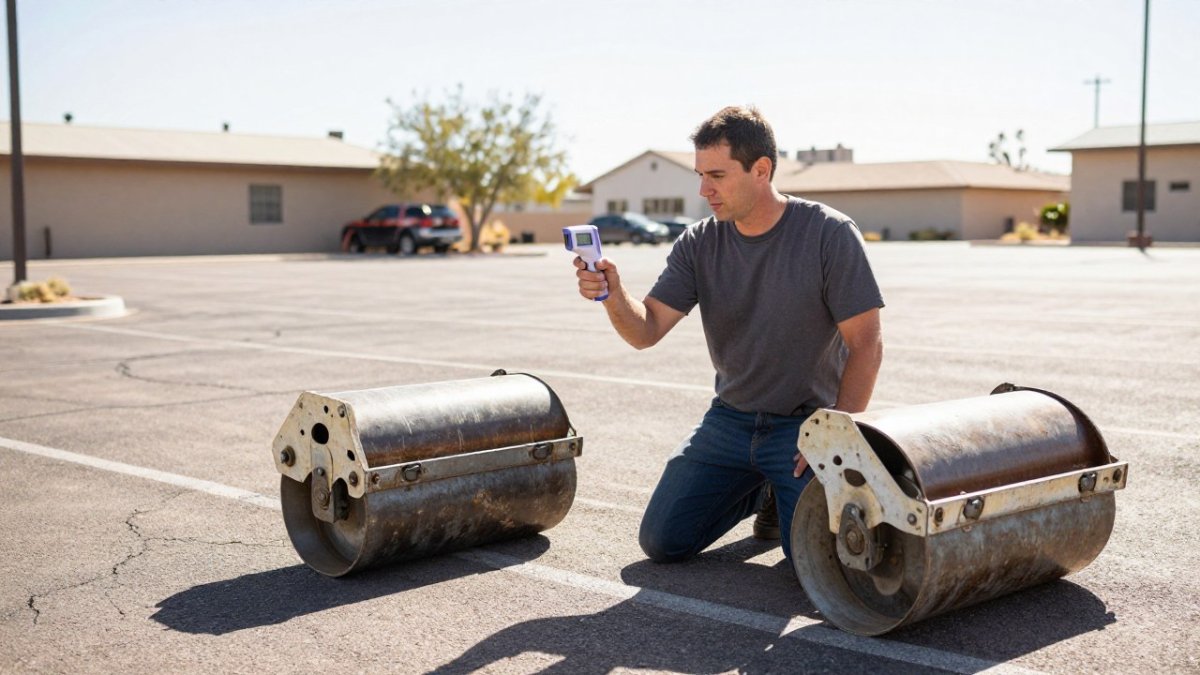
- Surface temperature: Measure the pavement itself with a handheld infrared thermometer or a contact probe. Take readings at several points across the lane, because shaded edges, bridge decks, and patched areas can run cooler than the open lane.
- Trend: Take the same readings twice, roughly 30 to 60 minutes apart, and note whether each is rising, holding, or falling. A reading that clears the minimum but is falling toward evening is a different decision from one that is climbing.
- Moisture: Confirm the surface is dry, with no standing water, no visible damp patches, and no recent irrigation or wash-down.
The Go/No-Go Decision
- Air temperature meets the binder minimum and is steady or rising
- Surface temperature meets the binder minimum at every measurement point, not just the warmest one
- Pavement is dry, with no standing water or damp patches
- No precipitation forecast for the application day
- No rain forecast during the curing window, including overnight
- Wind is light enough that chips will not blow off before the emulsion breaks
- Humidity is not high enough to slow curing past the planned closure
- Traffic control and signage are in place
If any item fails, do not start. If one item is marginal, the decision belongs to the crew supervisor, not the schedule.
Recheck Before the Second Half
A morning that meets every threshold can turn by afternoon. Recheck surface temperature, wind, and the radar before the second half of the spray. If the surface has cooled below the binder minimum or the wind has picked up enough to move chips, stop and reassess rather than finishing the lane on momentum.
Watch out: Forecasts are estimates, and a handheld thermometer on the pavement tells you what the surface is doing right now. Crew supervisors should take the readings themselves rather than relying on a phone app, because the difference between a forecast high and the actual surface temperature at the sprayer is often the difference between a seal that holds and one that loses chips.
Scheduling Your Next Commercial Chip Seal Project
The weather limits above only help if they shape the schedule from the start. Build the project plan around the forecast, not the other way around.
At Global Paving, we recommend these steps:
- Confirm the binder type and its temperature minimums.
- Pick a window with steady warm temperatures and no rain in the forecast.
- Plan the closure for the full curing period, plus a contingency day.
- Notify tenants and delivery partners early.
- Keep a crew-ready backup date.
If you manage several commercial properties, consider grouping sites by climate and season, so one forecast window can cover more than one job. For planning a full commercial project, our guide on Chip Seal Project Planning for Commercial Property Managers covers timing, coordination and preparation. If your concern is reopening the lot quickly, Chip Seal Maintenance for Retail Properties: A Practical Guide explains traffic and downtime planning.
Ready to talk through your schedule? Book a chip seal project with Global Paving and we will review your site, your binder and your forecast window together. Contact us to get started.
Frequently Asked Questions
What temperature is too cold for chip sealing?
The answer depends on the binder and the specification that governs the job. Minimum temperatures depend on the binder type and the governing specification, so a contractor should check the specific emulsion or asphalt cement being used and the project specification before treating any single number as the cutoff. Take both air and pavement readings on site before crews start.
Can commercial chip sealing be done in 50-degree weather?
Usually not for emulsion chip seals. Pavement surface temperatures are often lower than air temperatures in shade or early morning. Confirm the exact requirement in the project specification, and plan for a warmer window if the forecast does not reach the threshold.
How long does chip seal take to cure before traffic can use it?
Curing time depends on weather, and hot, dry conditions help speed the process by letting remaining water evaporate. Temperature, wind speed, relative humidity and solar radiation all affect curing time. Schedule traffic control and reopening with that range in mind, and avoid releasing traffic before the surface has set.
Can chip sealing be applied if rain is forecast?
Applying chip seal ahead of rain is risky because moisture interferes with emulsion break, bonding and aggregate retention. Review the forecast for the application window and the curing period after placement, not only the day of work. Schedules may change with weather, equipment and roadway conditions, which reflects how commercial crews treat rain risk in practice. Reschedule if rain is likely before the surface has cured.