Last Updated: November 19, 2026
Quick Summary
Chip seal maintenance for retail properties means preventive care for a pavement that is still structurally sound: sealing fine cracks, keeping water out of the base, and treating the surface on a schedule that fits peak shopping seasons. Chip seal adds a protective wearing surface but does not add strength, so it works best on uncracked lots and should be kept away from heavy truck zones.
- Chip seal suits sound, uncracked lots; it will not fix large alligator cracking or deep potholes.
- Use chip seal for stalls and general circulation, and consider other treatments for truck approaches and dock areas.
- Sweep loose chips within the first few days, then again after about two days.
- Inspect drive lanes monthly in peak season and loading zones after every heavy delivery cycle.
- Schedule inspections in spring and fall, and clear ponding water by fixing drainage before sealing.
Table of Contents
- Chip Seal vs. Asphalt for Retail Parking Lots
- Traffic Load Analysis: Where Chip Seal Holds Up and Where It Doesn’t
- Chip Seal Lifespan and What Shortens It
- Chip Seal Surface Maintenance Tips and a Seasonal Schedule
- Repairing Localized Failures Without Closing the Lot
- What Drives Chip Seal Maintenance Cost
- Scheduling Your Next Inspection or Quote Request
- Frequently Asked Questions
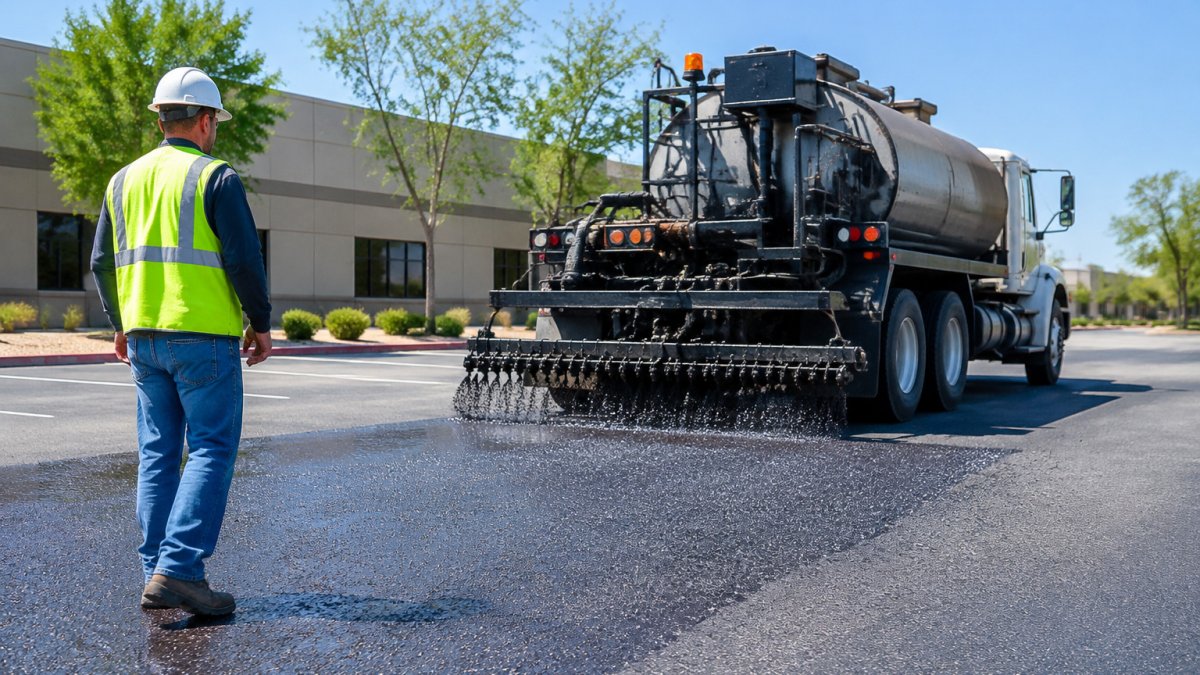
Chip seal maintenance for retail properties starts with understanding what the treatment does and where it fits. Chip seal is a pavement-preservation treatment: a layer of asphalt binder sprayed onto an existing surface, then covered with aggregate chips and rolled in place (Innovator September/October 2017, Issue 62).
The main job of a chip seal is sealing fine cracks and keeping water out of the base. Preventing water intrusion into the base is a primary purpose of the treatment.
Retail lots often consider chip seal for practical reasons, including that it can be scheduled in phases and that its cost depends heavily on the condition of the pavement underneath, which is why the next section matters.
Chip seal is also a preventive measure, and it generally performs best on pavement that is not already badly cracked.
Chip Seal vs. Asphalt for Retail Parking Lots
Chip seal and new asphalt serve different purposes. A new asphalt overlay adds structural thickness. A chip seal adds a protective wearing surface over what is already there. For a retail lot in reasonable condition, chip seal is usually the lower-cost, lower-disruption option.
Asphalt is the better choice when the base has failed or when the lot carries very heavy loads. Chip seal life depends on traffic, climate, drainage, and pavement condition, so on a busy commercial lot the traffic mix largely decides whether it will hold.
| Factor | Chip Seal | Asphalt Overlay |
|---|---|---|
| Best condition | Sound, uncracked base | Structurally sound base, some wear |
| Disruption | Lower, phased work | Higher, longer closures |
| Traffic tolerance | Moderate | High |
| Typical role | Preventive maintenance | Structural restoration |
Traffic Load Analysis: Where Chip Seal Holds Up and Where It Doesn’t
This is where most retail owners get into trouble. A chip seal does not add strength. It depends entirely on the pavement beneath it. Before you choose it, map your lot by traffic type.
Passenger car parking holds up well to chip seal. Shopper traffic, moving slowly and turning often, is generally manageable. Delivery lanes, loading zones, and fire lanes are different. Trucks turning on a chip-sealed surface can dislodge aggregate and cause the binder to shear.
Our practical rule: use chip seal for stalls and general circulation, and consider a different treatment for truck approaches and dock areas. Reserve heavier-duty repair for those zones.
Chip Seal Lifespan and What Shortens It
The service life of a stone chip seal depends on traffic volume, climate, and drainage conditions, and it can vary widely as a result.
Several factors shorten lifespan on retail lots:
- Heavy truck traffic and tight turning movements
- Poor drainage that leaves standing water on the surface
- Applying the seal over cracks that were not properly prepared
- Oxidation from years of sun exposure
- Delayed treatment, which lets water reach the base
Drainage deserves special attention. Ponding water breaks down the binder faster than almost anything else. If a lot holds water after rain, fix the grading before sealing.
Chip Seal Surface Maintenance Tips and a Seasonal Schedule
Routine care extends the life of a chip seal more than most owners expect. The goal is to keep water out, remove loose aggregate before it becomes a hazard, and time the work around retail traffic instead of against it. What follows is a retail-specific plan, not a generic road-maintenance list.
The first 30 days after application
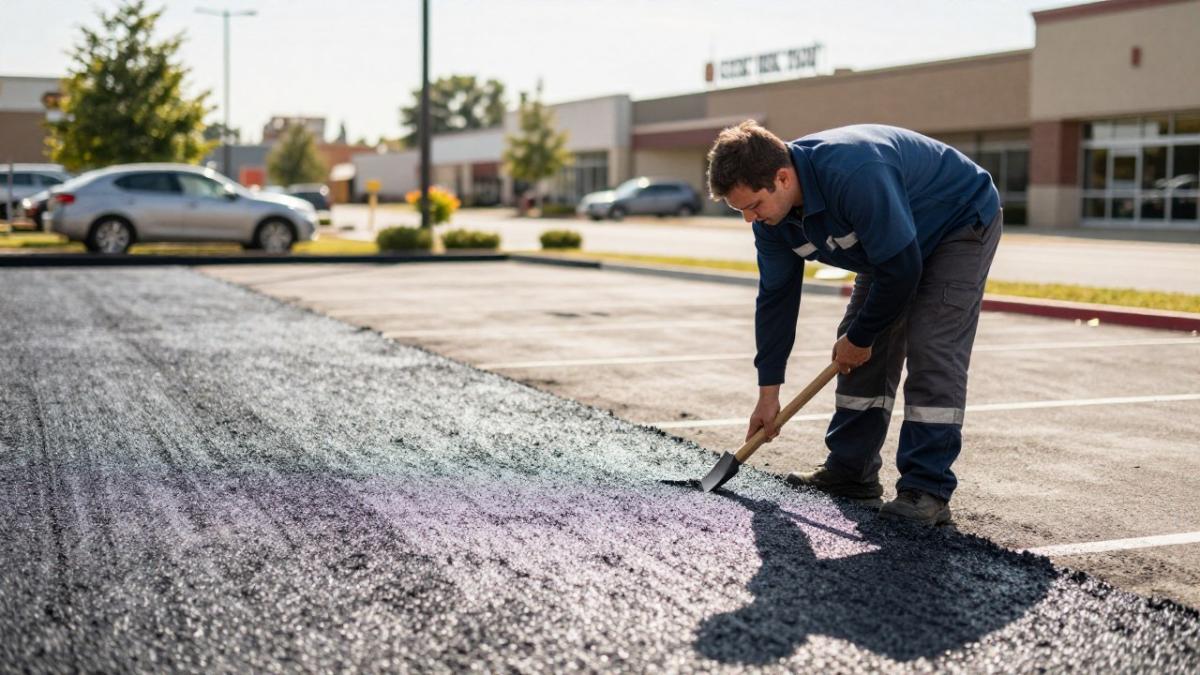
The first month is when a chip seal is most vulnerable. Loose chips are normal for the first few days, but they must be swept before they collect in stalls, clog drainage inlets, or get tracked into stores.
- Sweep loose chips within the first few days after application, then sweep again after roughly two days to catch remaining aggregate.
- Inspect after the first heavy rain for ponding, water movement, or aggregate displacement.
- Keep delivery trucks and heavy vehicles off the fresh surface as long as the contractor specifies; turning loads on green binder are the most common cause of early shear.
- Note any binder bleeding or aggregate loss and schedule a spot repair before it spreads.
Watch out: sweeping too aggressively with a stiff rotary broom can dislodge seated aggregate; use a light pass and let the surface tell you when it is stable.
A retail calendar that follows your traffic, not the pavement’s
Retail properties have peak seasons that a road does not, so it helps to build the maintenance calendar around those peaks, scheduling disruptive work in slower months.
| Season | Retail context | Maintenance focus |
|---|---|---|
| Late winter / early spring | Post-salt, post-freeze damage is visible; pre-season budgets are being set | Full walk-through inspection, crack sealing, drainage inlet clearing, pothole triage |
| Spring | Customer counts rising; avoid lane closures | Complete crack sealing and patching before peak traffic; verify striping and ADA stall markings |
| Summer | Highest traffic and heat; binder softens | Monitor for bleeding and heat-related softening, especially in drive lanes and turn radii; sweep as needed |
| Early fall | Pre-holiday planning; weather still workable | Clear leaves and debris, seal cracks before freeze, schedule any seal coat or spot repairs |
| Winter | Ice, snow removal, and salt stress | Limited work; watch for ice damming and drainage problems; document failures for spring repair |
Regular pavement inspections, typically in spring and fall, help catch small failures early. Build your schedule around those two visits, and consider a quick post-winter walk-through so small failures are caught before the spring rush.
Zone-based maintenance for retail lots
Not every part of a retail lot needs the same attention. Map the lot into zones and set different inspection frequencies:
- Drive lanes and turn radii: inspect monthly during peak season; these take the most turning stress and are the first to ravel.
- Loading zones and dock approaches: inspect after every heavy delivery cycle; truck turning is the leading cause of aggregate loss.
- Parking stalls: inspect quarterly; shopper traffic is gentler but oil spots and standing water still attack the binder.
- Fire lanes and accessible routes: inspect with the same frequency as drive lanes, because these must stay clear and compliant.
What to document
Keep a simple log with dates, photos, and locations of cracks, bleeding, and aggregate loss. A photo log makes it easier to compare contractor bids on the same terms and to show a pattern of failure in a specific zone rather than paying for a full-lot treatment when a spot repair would do.
Repairing Localized Failures Without Closing the Lot
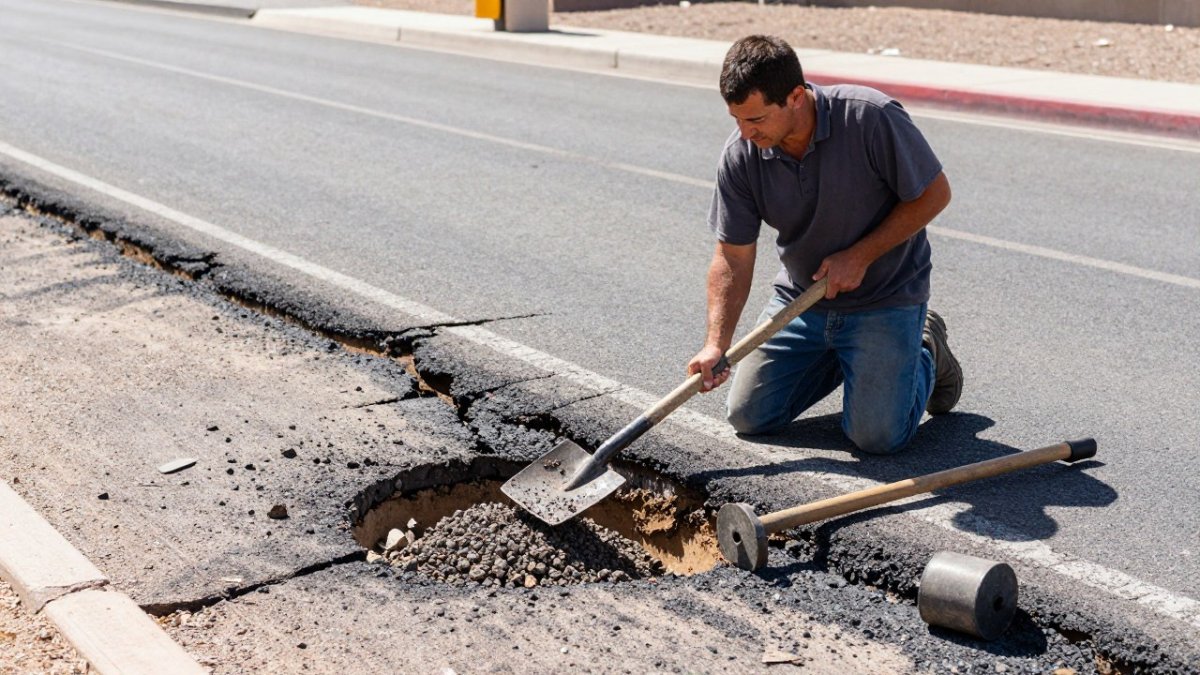
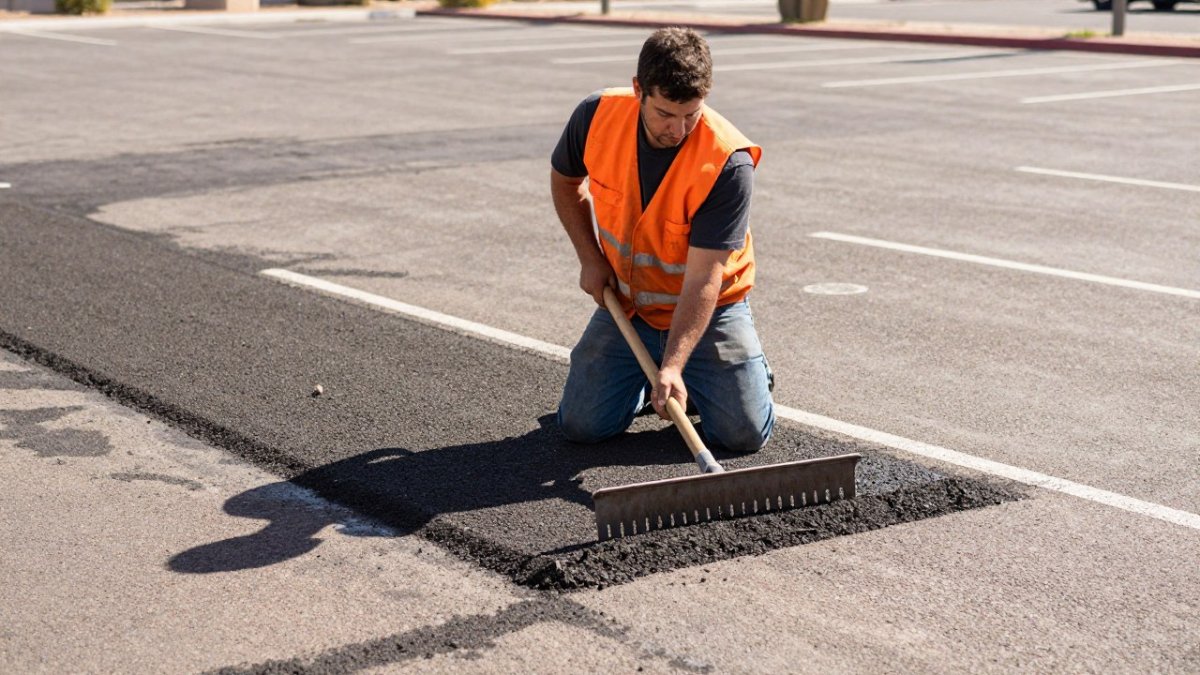
Localized failures, like a pothole, an oil spot, or a small area of raveling, are common on chip-sealed lots. The retail constraint is that you cannot shut down the lot to fix a ten-square-foot problem. The answer is zone-based repair: cordon off only the immediate area, work in small sections, and schedule the work during slower business hours.
Match the repair to the failure
Not every failure calls for the same fix. Diagnose before you patch:
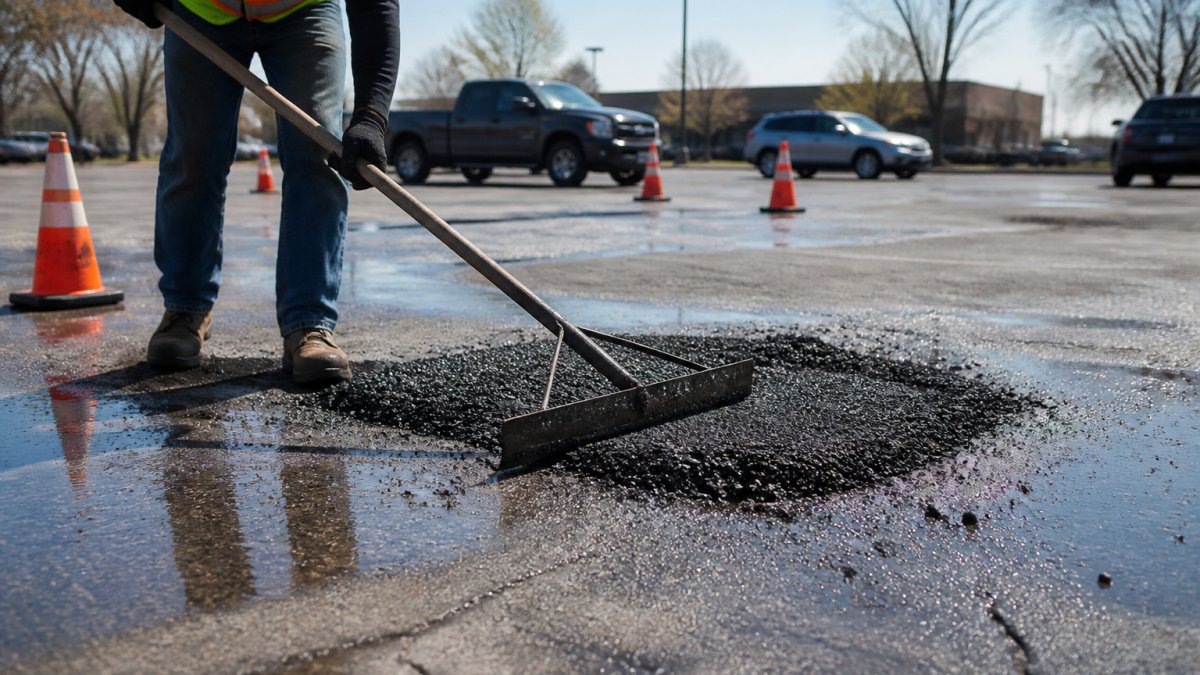
- Pothole or failed patch: remove all loose material down to sound pavement, clean the cavity, apply tack coat, and fill with a patching mix appropriate for the depth. For deeper holes, place in lifts rather than one thick pour.
- Raveling (aggregate loss): sweep the loose chips, clean the area, and apply a spot seal or a small chip seal patch so the surface matches the surrounding texture.
- Oil or fuel spot: these soften the binder and must be cleaned and primed before patching, or the new material will not bond.
- Alligator cracking in a small area: this signals a base problem; a surface patch will fail quickly, so treat it as a candidate for full-depth repair rather than a cosmetic fix.
Watch out: patching over a wet or dirty cavity is the most common reason a spot repair fails within a season; the patch must bond to clean, dry pavement.
Keeping the lot open while you repair
- Work one zone at a time and keep at least one route to every entrance open.
- Use cones and signage to route customers around the work, and coordinate with tenants so delivery schedules do not conflict with cure time.
- Schedule patching in early morning or after close, when traffic is lowest and the patch has time to set.
- Keep the work area small; a tight cordon is easier to manage than a wide one and reduces the temptation for customers to drive through.
The seam is where the next failure starts
An unsealed seam around a patch is where water gets in next. After the patch cures, seal the edges so the repair ties into the surrounding chip seal. Inspect the patch after the first rain and again after the first freeze to confirm the bond held.
For guidance on common mistakes in this kind of work, read 7 Pothole Repair Mistakes on Chip Seal Roads.
What Drives Chip Seal Maintenance Cost
Cost depends on the size of the lot, its current condition, the amount of prep work, and how the project is phased. Pricing depends on quantity, timing, and scope, so we do not publish a flat rate here.
Two factors are worth considering: the business impact of closing the lot during work, and the cost of delaying maintenance. Waiting until cracks spread can mean a larger repair later. Ask any contractor to break out prep, application, and cleanup separately so you can compare bids on the same terms.
For current pricing, contact Global Paving directly. We will walk your lot and give you a quote based on your actual conditions.
Scheduling Your Next Inspection or Quote Request
The best time to plan chip seal maintenance is before problems show up. Start with a condition assessment of your lot, sort the zones by traffic type, and build a seasonal plan around two yearly inspections.
If you are ready to take the next step, you can review our chip seal service options, see the full range of services we provide, or contact our team to request an inspection. If you are still weighing contractors, how to choose a commercial chip seal contractor covers the questions worth asking.
Frequently Asked Questions
How long does a chip seal last?
The service life of a stone chip seal depends on traffic volume, climate, and drainage conditions. Retail lots with heavy delivery traffic and turning vehicles tend to sit at the shorter end of that range, while lightly used lots with good drainage can last longer. Regular inspections and timely crack sealing help a chip seal reach the upper end of its service life. Pricing depends on quantity, dates, and delivery, so request a quote through Global Paving for current figures.
Does chip seal last longer than asphalt?
Not in general. A chip seal is a preservation treatment applied over an existing surface, and its service life is usually shorter than a full asphalt overlay or new asphalt pavement. Chip seal is typically the lower-cost option for slowing deterioration on pavement that is not already badly cracked. For a heavy-traffic retail lot, the right choice depends on the existing pavement condition, traffic loads, and budget, and a site inspection is the best way to compare the two.
How often should a retail parking lot be inspected?
Regular inspections, typically in spring and fall, help check for cracks, raveling, and drainage problems. Retail properties with heavy delivery traffic may benefit from more frequent checks after winter or heavy rain. Regular inspections let you catch small problems early, which is when crack sealing and localized repairs are most effective and least disruptive to store operations.
What are the signs that a chip seal surface needs repair?
Watch for loose or missing aggregate, exposed binder, cracks that reopen after sealing, and areas where water pools after rain. Rutting or soft spots under turning trucks also signal that the surface or base needs attention. Addressing these early with localized repair is usually less costly than waiting for a full treatment. A Global Paving inspection can help you determine whether a spot repair or a new seal is the better next step.