Quick Summary
A chip seal project is a preventive surface treatment for pavement that is still structurally sound, typically lasting 7 to 10 years. Property managers should inspect the lot first, fix drainage and surface distress, then phase the work around tenant traffic and ADA access routes.
- Chip seal suits sound pavement with minor oxidation; it is not a fix for failed bases.
- Expect a chip seal to last about 7 to 10 years, depending on traffic and truck volume.
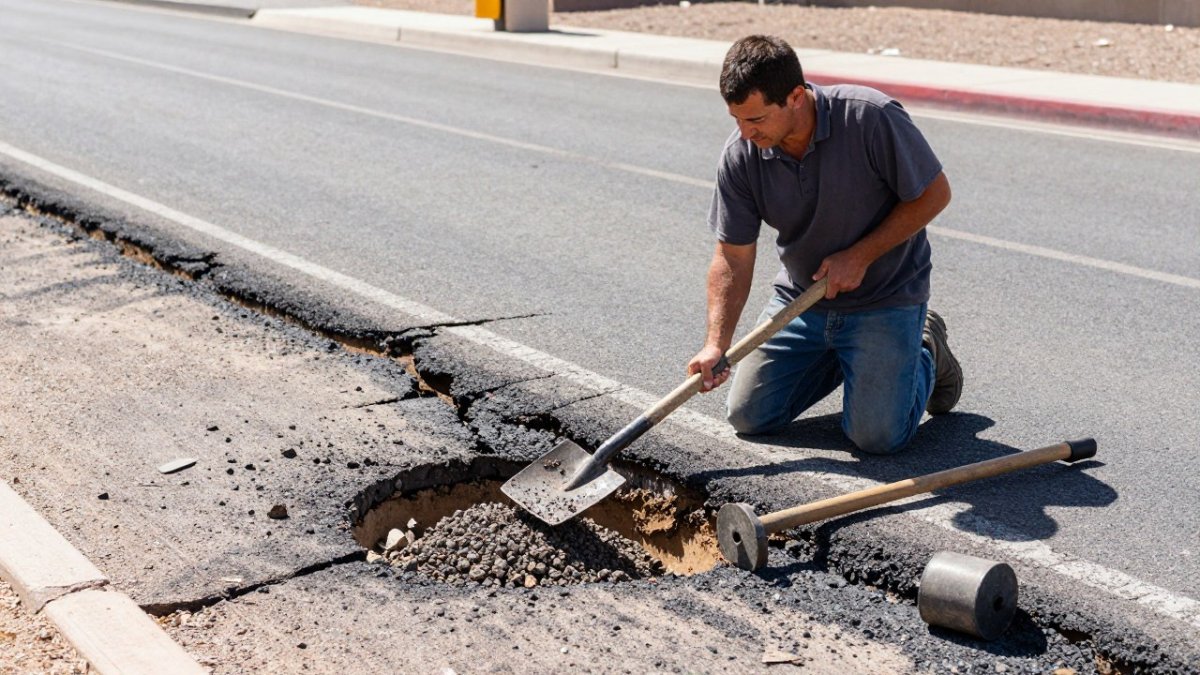
- Patch cracks, potholes and oil spots and allow curing time before the seal goes down.
- Keep accessible stalls and routes open or clearly rerouted, and sweep loose chips near curb ramps.
- Compare bids line by line, since low prices often exclude prep work and sweeping.
Table of Contents
- What Chip Seal Is and Where It Fits in Your Pavement Plan
- Chip Seal vs Asphalt: Which Surface Fits Your Lot
- Assessing Your Lot Before You Plan: Traffic Loads, Drainage and Surface Distress
- Chip Seal Maintenance for Retail Properties: Schedules, Repairs and ADA Compliance
- Budgeting for a Chip Seal Project: Cost Factors and Estimation
- Chip Seal Paving Schedule and Traffic Control Planning
- Scheduling Your Chip Seal Project With Global Paving
- Frequently Asked Questions
What Chip Seal Is and Where It Fits in Your Pavement Plan
Last Updated: November 20, 2026
Chip seal project planning for property managers starts with one question: is this surface due for preservation, or is it past the point where a seal will help? Global Paving has more than two decades of experience in asphalt work across the Greater Phoenix area.
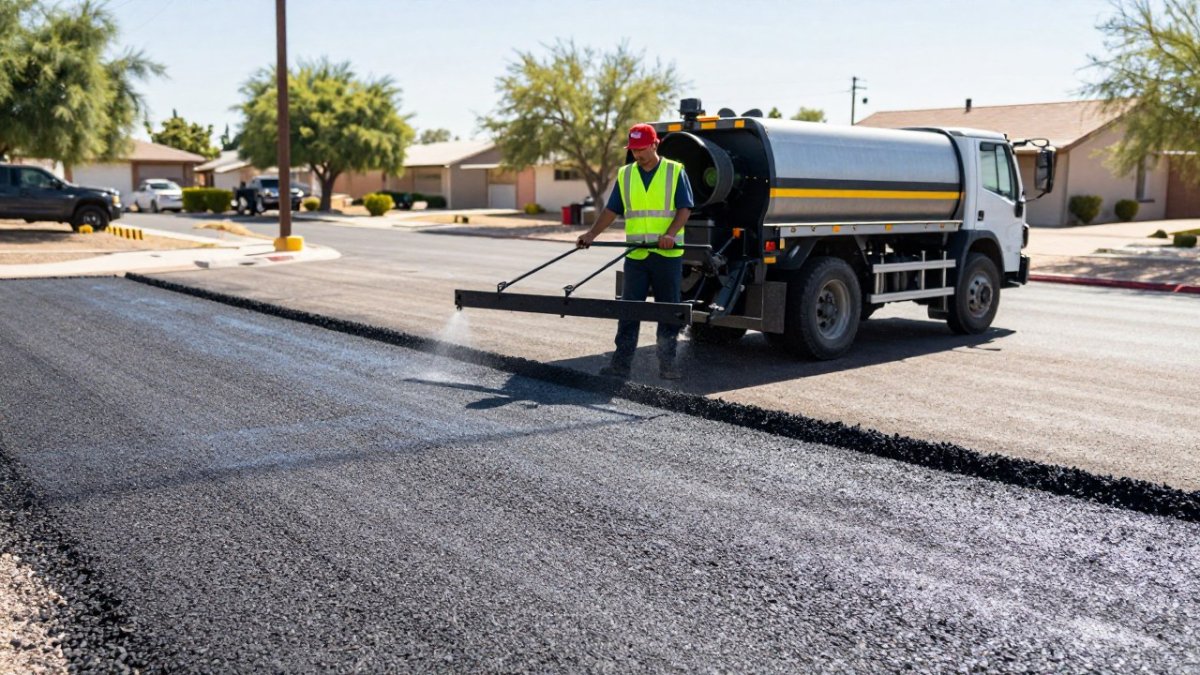
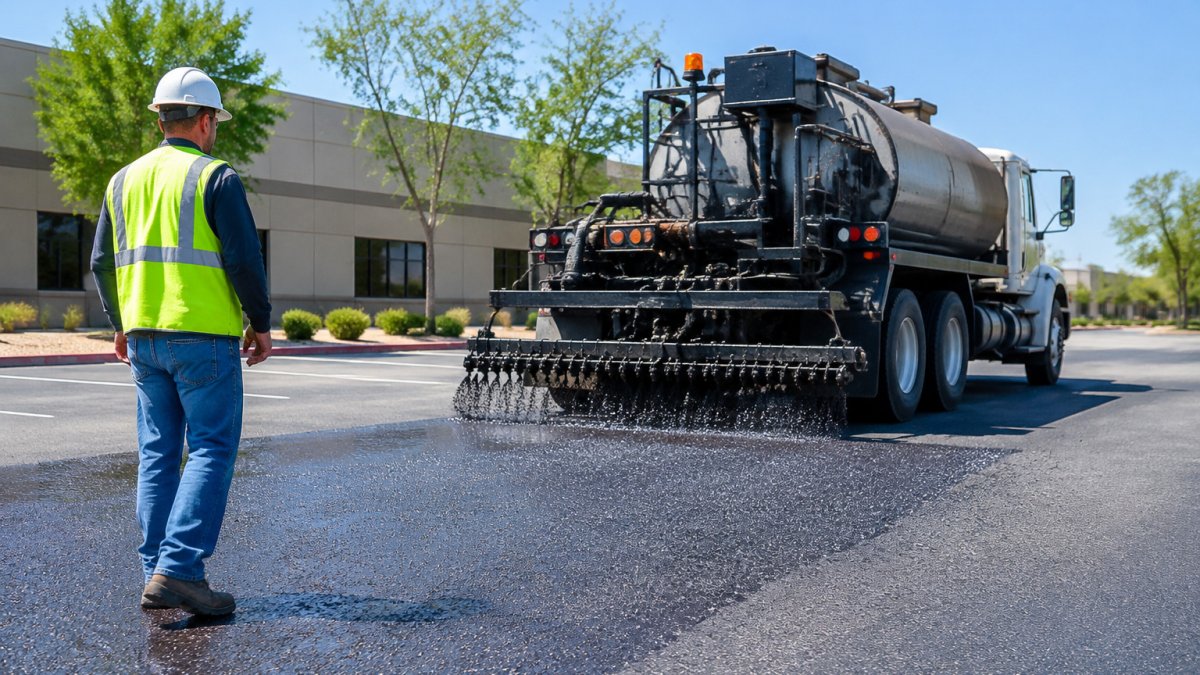
A chip seal is a layer of asphalt emulsion, or binder, sprayed onto the existing surface and immediately covered with aggregate. Rollers press the stone into the binder, and the excess is swept away after it cures.
Chip seal’s value depends on timing. The Mohave County Public Works guidance on chip seal expectations notes that chip seals typically last 7 to 10 years, with the actual figure varying by daily traffic volume and heavy truck traffic.
Research on pavement preservation supports the same point. A Transportation Research Board study on chip seal use in pavement preservation found that chip seal treatments can extend pavement service life by an average of about six years. The gain is largest when the surface is still in fair condition.
Where does chip seal fit in your plan? It belongs in preventive maintenance, between routine crack sealing and full mill-and-overlay or reconstruction. Think of it as the step that protects a sound base, not the fix for a failed one.
Chip seal service life by source
Source: Mohave County Public Works
Chip Seal vs Asphalt: Which Surface Fits Your Lot
Chip seal and asphalt overlay solve different problems, and the choice depends on your lot’s condition. Learn how to find a qualified commercial chip seal contractor to evaluate your lot. A chip seal is a preservation treatment for a surface that is still structurally sound. An asphalt overlay adds a new structural layer of hot-mix asphalt, which suits lots that need more strength or a smoother finish.
Here is a practical comparison for property managers:
| Factor | Chip Seal | Asphalt Overlay |
|---|---|---|
| Best condition | Sound base, minor oxidation | Moderate to heavy surface distress |
| Typical service life | About 7 to 10 years | Longer, depending on traffic and base |
| Disruption | Short curing window, traffic control | Longer closure, more equipment on site |
| Surface feel | Textured, gritty | Smooth, uniform |
| Relative cost | Generally lower per square foot | Generally higher per square foot |
Pros of chip seal:
- Lower cost than a full overlay on a sound pavement
- Quick application with a short return-to-traffic window
- Waterproofs the surface and slows oxidation
- Works well on low-speed areas like customer parking and drive aisles
Cons of chip seal:
- Loose stone can be a nuisance for the first few weeks
- Not suited to a base that is failing or heavily cracked
- Texture is coarser, which matters for ADA route surfaces
Asphalt overlay wins when the base is weak, the surface is rutted, or the lot needs a smooth finish for heavy equipment. Chip seal wins when you are trying to get more years out of a surface that still holds its shape. Many property managers use chip seal on the customer lot and overlay the delivery aisles, which is a sound split.
Assessing Your Lot Before You Plan: Traffic Loads, Drainage and Surface Distress
Before you schedule anything, inspect the lot. A Federal Highway Administration chip seal checklist recommends investigating whether crack sealing is needed and identifying existing distresses such as bleeding or flushing before any application. A seal applied over an unrepaired problem will not hold.
Start with three checks:
- Traffic loads. Count delivery trucks, forklifts and trash vehicles. Heavy turning loads at dumpster pads and loading docks need separate attention.
- Drainage. Standing water is the fastest route to early failure. Fix low spots and check gutters and catch basins first.
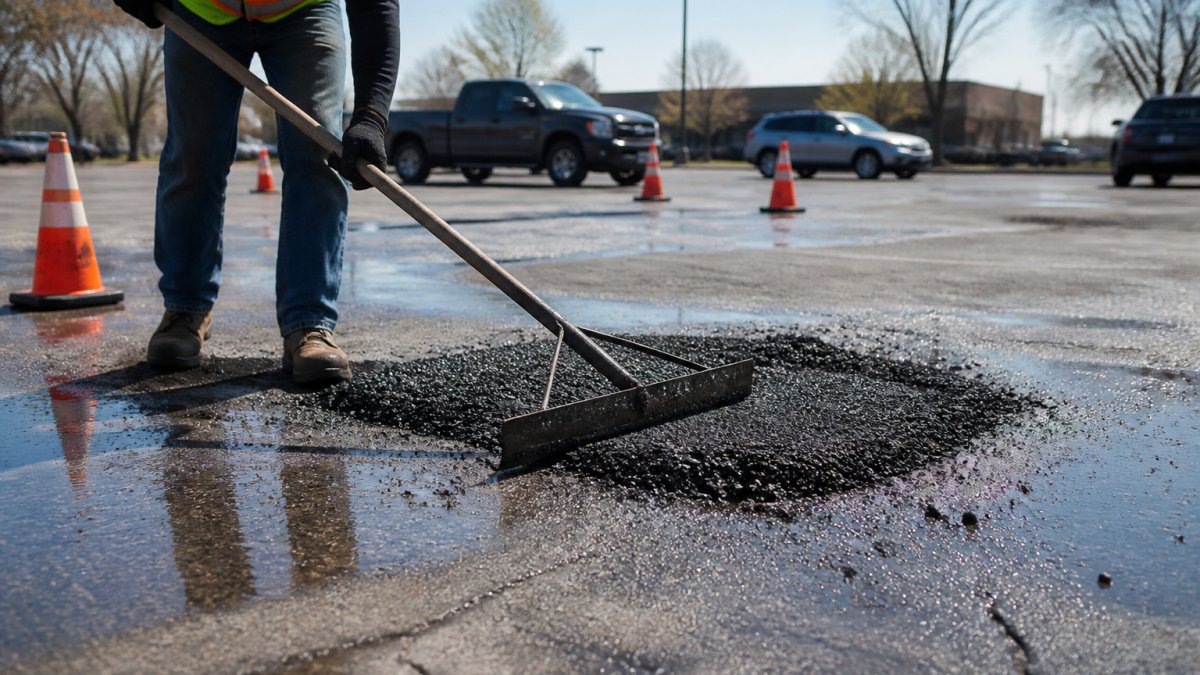
- Surface distress. Look for alligator cracking, raveling, bleeding and potholes. Patch these before the seal goes down.
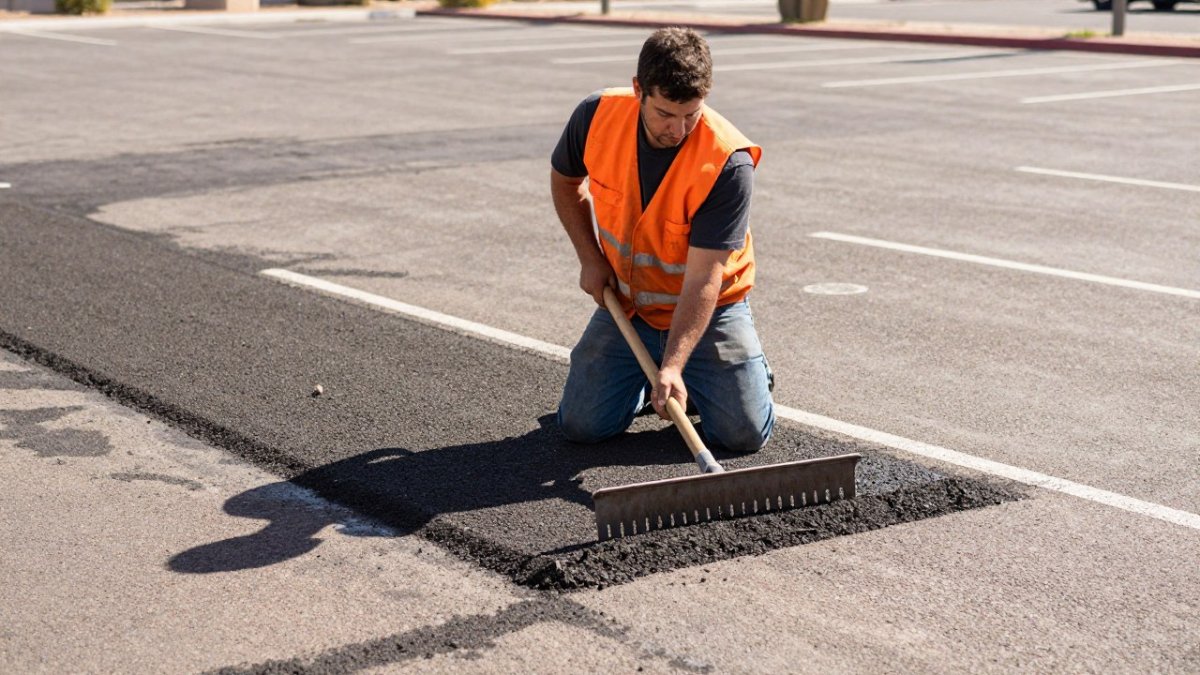
Plan for at least a few weeks between patching and sealing. Patches are generally completed well in advance so the repaired area can settle and cure. A seal placed over fresh, uncured patches can fail.
Chip Seal Maintenance for Retail Properties: Schedules, Repairs and ADA Compliance
Retail lots carry a load mix that includes customer cars creeping and turning at low speed, delivery trucks making tight turns at loading docks, trash trucks stopping at dumpster pads, and shopping carts rolling the same lanes every day. Plan maintenance around those patterns rather than a one-size schedule.
A workable annual rhythm for a retail property looks like this:
- Late winter or early spring (before peak season): full walk-through, crack sealing, pothole patching, and a drainage check on catch basins and low spots. Finish structural repairs well before any seal is scheduled.
- Late spring: apply chip seal, if the lot is due, in a window that avoids your tenant peak. Build in a cure period before restriping and reopening accessible routes.
- Summer: monthly sweep of chip-sealed areas, especially near curb ramps, accessible stalls, and store entrances where loose aggregate collects.
- Fall: inspect for raveling, bleeding, and new cracks after the heaviest traffic months; schedule spot repairs before winter moisture.
- Year-round: log every repair by location so you can see whether failures cluster at dumpster pads, loading zones, or turn radii.
Localized failures can often be repaired on their own rather than waiting for a full reseal. Before deciding, see whether outsourcing chip seal maintenance is worth it compared with doing it in-house. Review common pothole repair mistakes that cause early failure on chip seal roads before you set your schedule.
ADA compliance is where retail chip seal projects most often go wrong. Accessible routes and parking spaces must remain firm, stable, and slip-resistant, and the accessible route from the accessible stall to the entrance must stay usable throughout the project. Loose chips near curb ramps or accessible stalls create a real hazard for wheelchairs, walkers, and strollers.
Watch out: scheduling a seal during peak shopping season invites complaints, so set the work window with your tenants before a single truck arrives, and confirm that accessible stalls and routes remain open or clearly rerouted at all times.
Budgeting for a Chip Seal Project: Cost Factors and Estimation
Chip seal pricing depends on lot size, existing surface condition, how much patching and crack sealing is needed, traffic control requirements, and how the work is phased. Read a realistic breakdown of what chip seal road resurfacing typically costs before requesting bids. Global Paving does not publish standard per-square-foot rates; visit the Global Paving website or request a quote for pricing specific to your property.
The cost drivers that move a retail chip seal budget most are:
- Square footage and layout. A simple rectangular customer lot prices differently than a lot with islands, drive-through lanes, and tight loading areas that slow the crew.
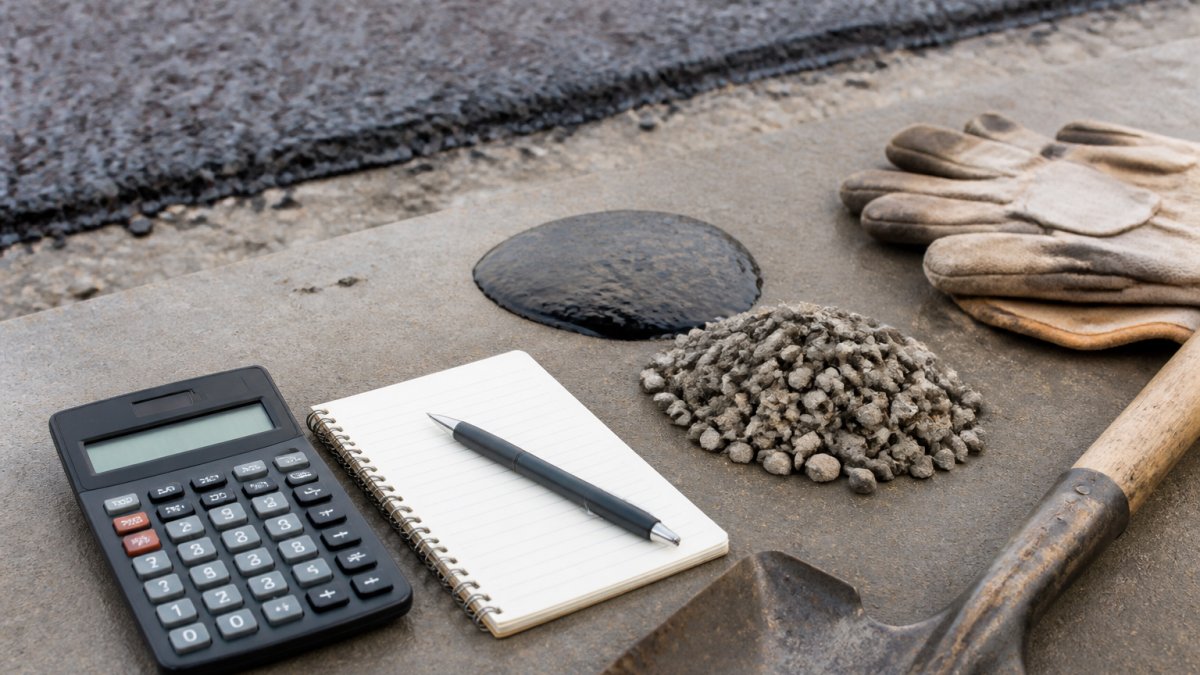
- Prep work. Crack sealing, pothole patching, and oil-spot cleanup are often the largest variable. A bid that excludes prep is not comparable to one that includes it.
- Traffic control and phasing. Keeping part of the lot open at all times requires more cones, signage, and crew time than a full closure.
- Sweeping and cleanup. Excess aggregate must be swept and removed; confirm this is in scope.
- Restriping and ADA markings. Striping, accessible stall markings, and signage restoration are frequently a separate line item.
A practical estimation method for a property manager is to build a scope sheet before requesting bids: measure the lot, list the distresses you found in the walk-through, note the traffic control constraints, and specify the cure and reopening requirements. Send the same scope sheet to every bidder. When bids come back, compare line items rather than totals, and ask each contractor to explain any line that differs sharply from the others.
Public projects are different from private ones. A San Mateo County public contracting requirement shows that public contracts above a set threshold must be formally advertised and awarded by the governing body. If your property is tied to a public agency or district, build that timeline into your budget.
Watch out: a low bid that leaves out crack sealing, patching, or sweeping can cost more over time, so compare scope line by line before you compare price.
Chip Seal Paving Schedule and Traffic Control Planning
A well-run chip seal project follows a predictable sequence: prep and patching, then the seal application, then rolling, sweeping and a cure period before full traffic returns. Public projects that run on a set calendar show how tight these windows can be. A Tulare County chip seal program scheduled 70 miles of roadway over a 14-day work window, and a Yavapai County chip seal project was scheduled within a three-month window. Your lot is smaller, but the same discipline applies.
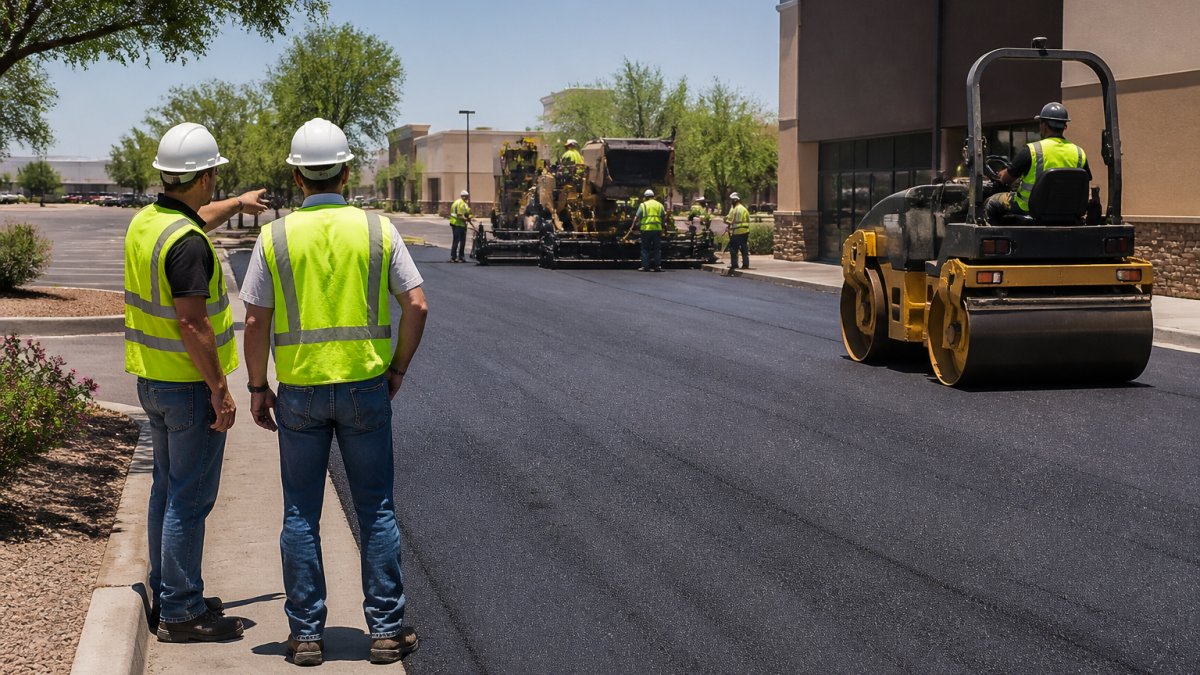
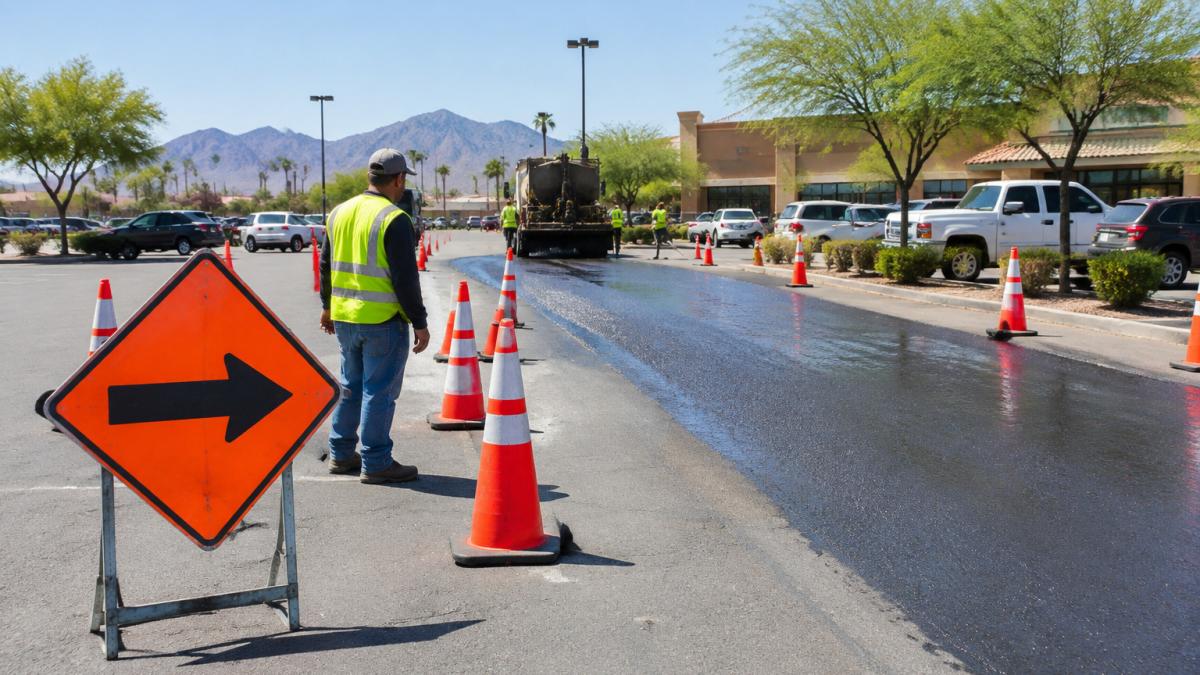
Build the schedule around your tenants. Phase the work so that at least some parking stays open at all times, and post clear signage and cones before the crew arrives. Agree on a work window with the property owner and key tenants, and confirm a backup date for weather.
Schedule the seal for warm, dry weather, since chip seal needs temperatures that allow the binder to set properly. Learn how to choose the right chip seal aggregate size, since it affects how quickly the surface can reopen to traffic. Plan around the monsoon season, when rain can interrupt curing.
Photo of the traffic plan in practice:
Scheduling Your Chip Seal Project With Global Paving
Chip seal project planning for property managers works best when the inspection, budget, schedule and traffic plan are all settled before the first truck rolls. Global Paving can help with the planning and scheduling process, with a focus on minimal disruption to your tenants and a clear scope you can compare against other bids.
If you are weighing a chip seal for one lot or planning maintenance across several properties, start with an inspection. Request a quote from Global Paving, and we will walk the site with you, flag any drainage or distress issues, and map out a phased schedule that fits your operations.
Frequently Asked Questions
How long does a chip seal last?
Chip seals typically last 7 to 10 years, depending on daily traffic volume and the share of heavy trucks. Pavement preservation research generally finds that chip seal treatments extend pavement service life, with the benefit depending on pretreatment conditions. For commercial lots with delivery trucks and forklifts, plan on the shorter end of that range and schedule inspections so the seal is renewed before the surface begins to oxidize or ravel.
Does chip seal last longer than asphalt?
Chip seal is a preservation treatment rather than a full replacement, so it is compared to asphalt overlays on cost and timing rather than direct lifespan. A chip seal can help extend the life of an existing asphalt surface. Whether it is the right choice depends on the condition of the underlying pavement, which is why a site assessment should come before any decision.
How long should a parking lot be closed after chip sealing?
Closure time depends on the project size, the curing period and the traffic control plan. Most of the work can be phased so that sections reopen as they are completed, and the seal needs time to cure before heavy vehicles drive on it. Ask your contractor for a written schedule showing which zones close and for how long, so tenants and delivery drivers know what to expect.
How much does chip seal cost per square foot?
Global Paving does not publish standard per-square-foot rates because pricing depends on the quantity of surface, the condition of the existing pavement, phasing, traffic control requirements and delivery schedules. Each property is different, so the most reliable figure comes from a site-specific quote. Visit the Global Paving website or request a quote to receive pricing tailored to your lot and operating constraints.