Last Updated: October 23, 2026
Quick Summary
A well-installed chip seal lasts 7 to 10 years on average, and up to 12 years in ideal, low-traffic conditions. Driveway chip seal runs shorter at 5 to 7 years, while a 2023 field study found chip-seal treatments extended pavement life by 4 to 17 years depending on the surface’s condition before treatment.
- Traffic volume and axle load are the dominant factors deciding where a chip seal lands in its lifespan range.
- Match chip size to the heaviest routine vehicle, not the average one, and never downsize in turning zones.
- Sweep twice a year, seal cracks early, and reapply a seal coat every few years to add years of service.
- Chip seal is surface protection only, while asphalt is a structural layer that distributes load through the base.
- Replace rather than patch once more than a quarter of the surface shows failure.
Table of Contents
- How Long Does Chip Seal Last? The Real Numbers
- What Factors Affect How Long Chip Seal Lasts
- Chip Seal Maintenance: The Steps That Add Years
- Chip Seal vs Asphalt Durability: Which Lasts Longer?
- Chip Seal Repair: Fixing Damage Before It Spreads
- Signs Chip Seal Needs Replacement
- Conclusion
- Frequently Asked Questions
How Long Does Chip Seal Last? The Real Numbers
A well-installed chip seal lasts 7 to 10 years on average, and up to 12 years in ideal, low-traffic conditions, according to New England Asphalt’s 2026 lifespan guide. At Global Paving, we field this question constantly from property managers weighing a chip seal job against a full overlay. The honest answer: how long does chip seal last depends far more on prep and traffic than on the calendar.
Driveway estimates run shorter. Sunrise Asphalt (2017) puts driveway chip seal at 5 to 7 years, while Perrin Construction (2020) says about 5 to 8 years before resurfacing. A 2023 field study by A.
Below, we break down the factors that decide which end of the range you land on. For the full service picture, see our chip seal page.
| Surface Type | Typical Lifespan | Best For |
|---|---|---|
| Chip seal (driveway) | 5-7 years | Low-traffic residential |
| Chip seal (roadway) | 7-10 years | Commercial lots, roads |
| Chip seal (ideal conditions) | Up to 12 years | Light traffic, good base |
| Asphalt overlay | Longer per cycle | Heavy traffic, smooth finish |
What Factors Affect How Long Chip Seal Lasts
Lifespan is decided by five interacting variables. Get them right and a seal reaches the top of the 7-to-10-year range; get them wrong and it fails in three.
**1. Mohave County Public Works ties its 7-to-10-year figure directly to daily traffic and heavy-truck counts (Chip Seal Facts).
2. Base condition. Chip seal is a surface treatment, not a structural fix. If the base is failing, the seal inherits the failure. A 2023 field study by A.
3. Aggregate size, gradation, and embedment. Nominal chip size alone does not determine performance.
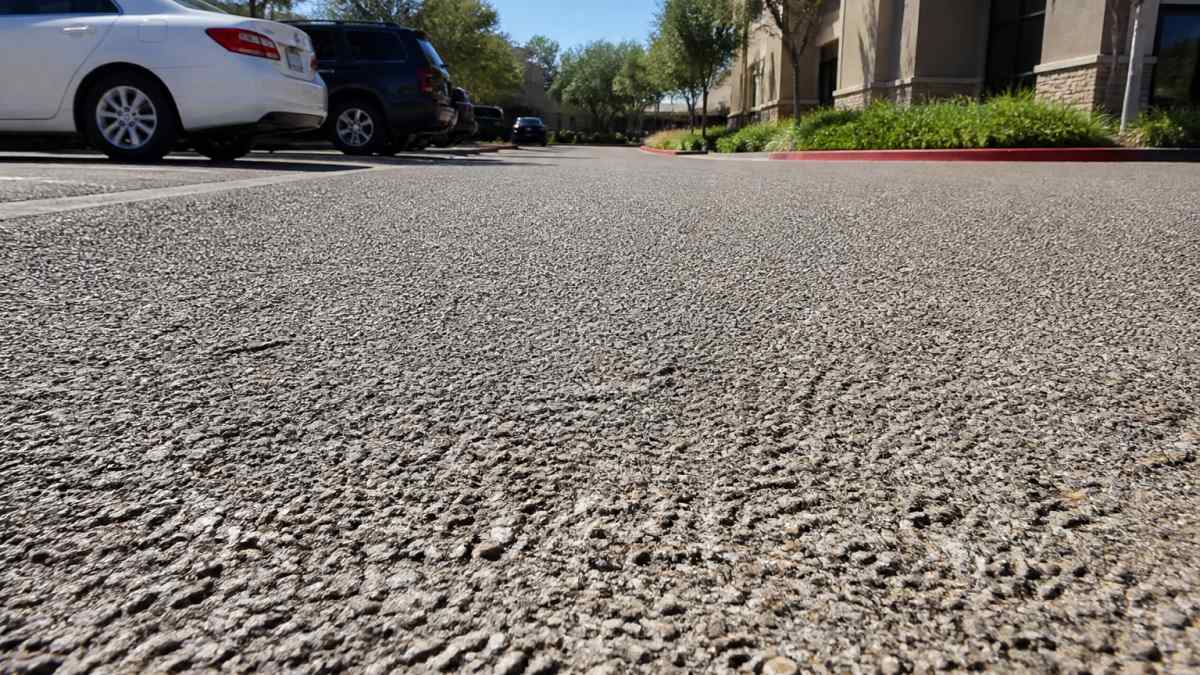
4. Climate and season. Freeze-thaw cycles, intense heat, rainfall, and snowplowing all shorten service life. In freeze-thaw regions, water entering microcracks expands and pries aggregate loose.
**5.
Chip Size Selection by Traffic and Use
The gap most guides miss is a practical size-by-use guide. The chart below connects aggregate size to traffic, texture, and application. Sizes are nominal; confirm gradation and binder compatibility with your contractor and review aggregate specifications and samples before approving a mix.
| Nominal Chip Size | Traffic / Use | Surface Texture | Best Application | Watch-Outs |
|---|---|---|---|---|
| 3/8 in. | Cars, light-duty parking, driveways | Smooth, quieter | Residential driveways, employee lots | Shears faster under trucks; avoid in heavy-turning aisles |
| 1/2 in. | Mixed car and light-truck traffic | Medium | Commercial parking lots, low-speed roads | Balance of durability and ride; most common commercial choice |
| 5/8 in. | Delivery trucks, buses, moderate heavy traffic | Coarse, louder | Commercial and industrial lots, bus routes | Rougher for pedestrians; plan accessible routes carefully |
| 3/4 in. | Heavy trucks, high axle loads | Very coarse | Industrial yards, truck routes | Loose chips until embedment; snowplow risk |
Two rules of thumb: match chip size to the heaviest routine vehicle, not the average one, and never downsize aggregate in turning or braking zones just to smooth the ride, that is where shear stress concentrates.
How Vehicle Type and Turning Movements Change the Answer
Commercial lots rarely serve one vehicle class. Cars, delivery vans, buses, and heavy trucks impose different stresses:
- Cars distribute load evenly and rarely shear aggregate; small chips suffice.
- Delivery trucks and buses combine high axle loads with frequent stopping and tight turning, concentrating shear at corners and stop bars.
- Heavy trucks and forklifts demand larger, angular, well-graded aggregate and deeper embedment.
Map your lot’s turning movements before choosing a chip. Drive aisles, corners, and stop bars may warrant a larger chip or a reinforced section even when the rest of the lot uses a finer surface. This is the kind of specification detail that separates a seal that lasts from one that ravels early.
Ask your contractor for aggregate samples and the proposed gradation before work begins. Compare them against the traffic chart above and confirm the binder type suits your climate.
For the full service picture, see our chip seal page.
Chip Seal Maintenance: The Steps That Add Years
Preventive maintenance is what separates a 7-year seal from a 12-year one. The steps are simple:
- Sweep the surface twice a year to clear grit and debris.
- Seal cracks as soon as they appear, before water gets in.
- Reapply a seal coat on schedule, typically every few years.
- Keep heavy vehicles off fresh seal for the curing window.
- Fix drainage issues so water does not pool on the surface.
The Doolittle LLC case study makes the point sharply. A double chip seal reached the end of its useful life 21 years after application, but the lack of maintenance became obvious in the final two years. Care delays decline. Neglect accelerates it.
Schedule your first crack-fill inspection within 12 months of installation. Catching hairline cracks early costs far less than patching a failed section later.
For ongoing protection options, review our parking lot maintenance services.
Chip Seal vs Asphalt Durability: Which Lasts Longer?
Asphalt typically outlasts chip seal per cycle, but that comparison hides the cost and lifecycle picture. Perrin Construction (2020) describes chip seal as lasting 5 to 8 years before resurfacing and calls that less durable than asphalt. Fair. But chip seal costs a fraction of a full overlay and refreshes the surface fast.
Why Asphalt Lasts Longer
Asphalt is a structural layer, typically several inches thick, that distributes load through the base. Chip seal is a thin surface treatment, a binder film with embedded aggregate, that protects the surface but adds little structural strength. That is the mechanism behind the durability gap: asphalt carries load, chip seal protects what carries load. On a sound base, a chip seal every several years keeps a lot serviceable at lower lifetime cost. On a failing base, neither option saves you.
Lifecycle Cost Comparison
Material and installation costs vary widely by region, project size, and site conditions, so treat any figure as a planning range, not a quote. A common pattern is that chip seal costs a fraction of a full asphalt overlay per square yard, but it recurs more often. Over a 20-year horizon, the cheaper-per-cycle option is not automatically the cheaper lifetime option, the number of cycles matters. Ask your contractor for a lifecycle comparison that includes installation, maintenance, and resurfacing intervals, quoted in USD for your specific lot.
| Factor | Chip Seal | Asphalt Overlay |
|---|---|---|
| Typical lifespan per cycle | 5-10 years (up to 12 ideal) | Longer per cycle |
| Structural contribution | Surface protection only | Load distribution |
| Relative installation cost | Lower per square yard | Higher per square yard |
| Resurfacing frequency | More frequent | Less frequent |
| Best use | Preservation on sound base | Heavy traffic, smooth finish, structural renewal |
When Each Makes Sense
The Ohio Department of Transportation investigated chip sealing and micro surfacing effectiveness, reported by A. Rajagopal (2010), confirming these treatments are evaluated as preservation tools rather than replacements. That framing is the decision rule:
- Choose chip seal when the base is sound and you want to extend pavement life at low cost.
- Choose an asphalt overlay when the base needs structural renewal, traffic is heavy, or a smooth finish is required.
If you are weighing a full rebuild, explore asphalt resurfacing as the alternative.
Contractor Questions Before You Commit
Before approving either option, ask for aggregate specifications and samples, the proposed gradation and binder type, installation methods, curing and traffic-control plans, and the warranty terms. A checklist review of these items gives commercial property owners actionable procurement guidance and protects against premature wear.
Chip seal wins on cost per cycle; asphalt wins on durability per cycle. The right choice depends on base condition, traffic, and how many cycles you will pay for over the life of the lot.
Chip Seal Repair: Fixing Damage Before It Spreads
Small failures turn into big ones fast. Repair chip seal when you spot:
- raveling, where stone chips loosen and scatter
- potholes or depressions holding water
- alligator cracking, a sign the base is moving
- bleeding, where binder rises and creates a slick surface
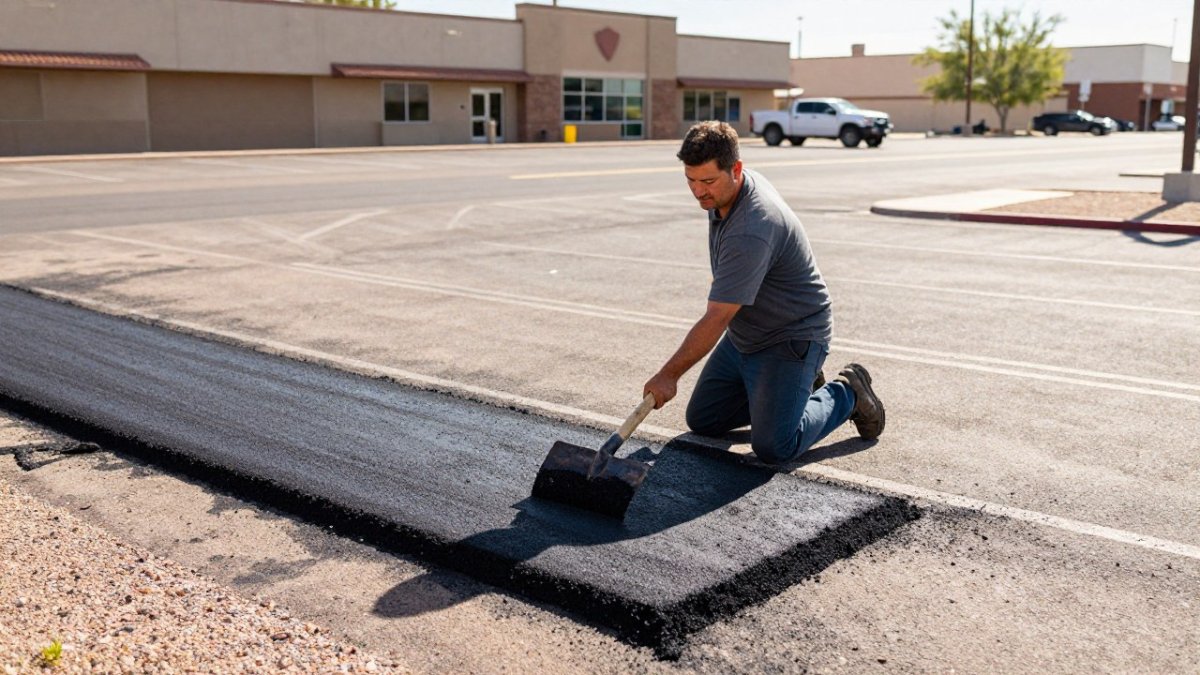
Fix isolated spots promptly. A patched pothole stops water from undermining the surrounding pavement. Left alone, one bad spot becomes a failed lane within a season or two.
Ignoring raveling is the most common and costly mistake. Once stone chips strip away, the binder wears through and the surface fails years ahead of schedule.
Book asphalt repair before damage spreads to the base.
Signs Chip Seal Needs Replacement
Replacement is due when repairs stop paying off. Watch for widespread cracking across the lot, rutting that returns after patching, and surface texture worn smooth to the binder. If more than a quarter of the surface shows failure, patching is throwing money at a losing battle.
Age matters too. A seal past its expected range with growing defects is a candidate for replacement, not another patch. A double chip seal can stretch well past a decade, as the Doolittle case shows, but only with upkeep.
When you suspect it is time, contact us for an assessment and a straight answer on repair versus replace.
Conclusion
Chip seal lifespan is not a fixed number. It is the product of base condition, traffic, aggregate choice, and maintenance discipline, and the data proves the range runs from roughly 5 to 17 years depending on those inputs. The properties that get the long end of that range are the ones that plan maintenance from day one.
Global Paving brings over two decades of experience to commercial, industrial, and HOA properties. We focus on transparent communication, no high-pressure sales, and surfaces built to withstand demanding conditions. We refuse to cut corners, and we tailor each job to your budget and operations with minimal disruption.
Get a quote from Global Paving and protect your pavement investment for the long haul.
Frequently Asked Questions
How long does chip seal typically last?
Most chip seal surfaces last between 5 and 10 years. Contractor estimates for driveways often land at 5 to 7 years, while broader roadway and parking lot estimates run 7 to 10 years, with up to 12 years in ideal, low-traffic conditions. A 2023 study found chip seal treatments extended pavement life by 4 to 17 years depending on the surface’s condition before treatment. Traffic volume, climate, and installation quality all shift where your lot falls on that range.
Is chip seal more durable than asphalt?
Chip seal typically lasts about 5 to 8 years before resurfacing, which is shorter than a full asphalt overlay. But that comparison misses the point: chip seal is a surface treatment applied over an existing asphalt base, not a replacement for it. When you compare chip seal vs asphalt durability, the fair question is how much life the treatment adds to the pavement you already have. A 2023 field study found chip seal added 4 to 17 years of service life depending on pretreatment condition.
What are the signs chip seal needs replacement?
Watch for widespread aggregate loss where the surface turns smooth and bare, multiple areas of raveling or potholes, and cracking that keeps returning after patching. The clearest signal is when chip seal repair stops holding and the same spots fail season after season. One documented double chip seal lasted 21 years, but the case study notes maintenance was lacking and the final two years made that obvious. If your lot is in that final stretch, replacement is usually the better spend.
Does heavy traffic shorten the life of chip seal?
Yes. Public-works guidance ties chip seal service life directly to traffic exposure, noting that daily traffic and heavy-truck volumes change the timeline. A lot serving delivery trucks or forklifts will wear faster than a lightly used residential street. Vehicle type and turning movements also matter: slow, turning commercial vehicles scrub the surface and can dislodge aggregate sooner. If your site sees constant heavy traffic, expect the lower end of the lifespan range and plan maintenance accordingly.