Quick Summary
A polymer-modified chip seal is the option worth evaluating first for heavy truck traffic, since conventional chip seals are generally recommended for roads below 3,000 average annual daily traffic per lane. Final choice depends on the truck mix, speed, turning movements, and the existing pavement underneath.
- Conventional chip seals are generally recommended for roads carrying fewer than 3,000 average annual daily traffic per lane.
- A North Carolina DOT project is studying polymer-modified chip seals for higher-volume roads; no specific threshold is established.
- Double-course chip seal is often considered a minimum for roads with regular heavy-truck traffic, especially where trucks brake or turn.
- Hot mix asphalt provides the stronger, more durable surface for sustained heavy truck traffic, while chip seal costs less up front.
- Opening a fresh chip seal to heavy trucks before the stone sets can strip aggregate within days.
Table of Contents
- What Is the Best Chip Seal for Heavy Truck Traffic?
- How Chip Seal Works and Where It Fits Best
- Chip Seal Aggregate Size: Matching Stone to Truck Loads
- Chip Seal vs. Hot Mix Asphalt for Truck Traffic
- Single, Double and Triple Course Designs Compared
- Chip Seal Durability and Lifespan Under Trucks
- Chip Seal Application Best Practices for Heavy-Duty Surfaces
- Booking a Traffic Assessment for Your Chip Seal Project
- Frequently Asked Questions
What Is the Best Chip Seal for Heavy Truck Traffic?
Last Updated: November 24, 2026
A conventional chip seal is usually the wrong choice for heavy truck traffic, and a polymer-modified chip seal is the option worth evaluating first. Chip seals are generally recommended for roads carrying fewer than 3,000 average annual daily traffic per lane, so a surface carrying loaded trucks sits outside the range most standard designs were built for.
Polymer-modified binders are being studied specifically for higher-volume roads. A North Carolina Department of Transportation research project set out to develop guidelines for how much heavy traffic modified chip seals can support. The published results do not establish a specific threshold, so anyone quoting one should check the source directly. North Carolina DOT research on extending chip seals to high-volume roads using polymer
The practical answer depends on the truck mix, the speed, the turning movements, and the existing pavement underneath. A parking lot with forklifts and delivery trucks turning daily is a different problem from a rural road with occasional heavy loads.
How Chip Seal Works and Where It Fits Best
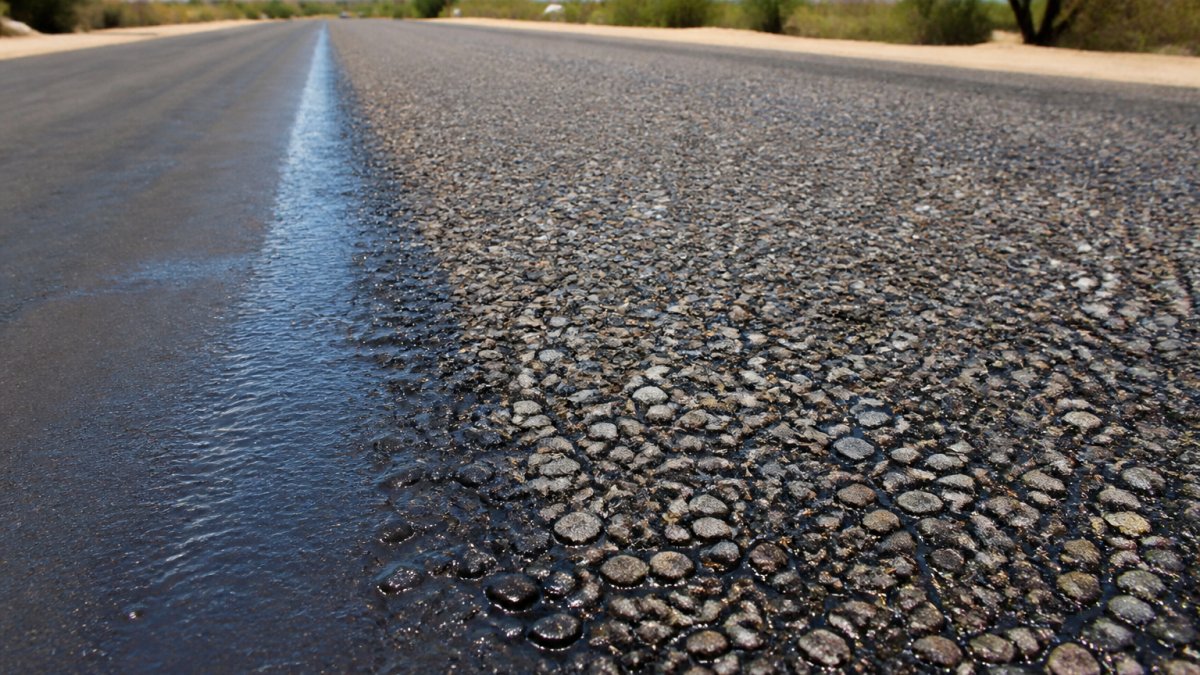
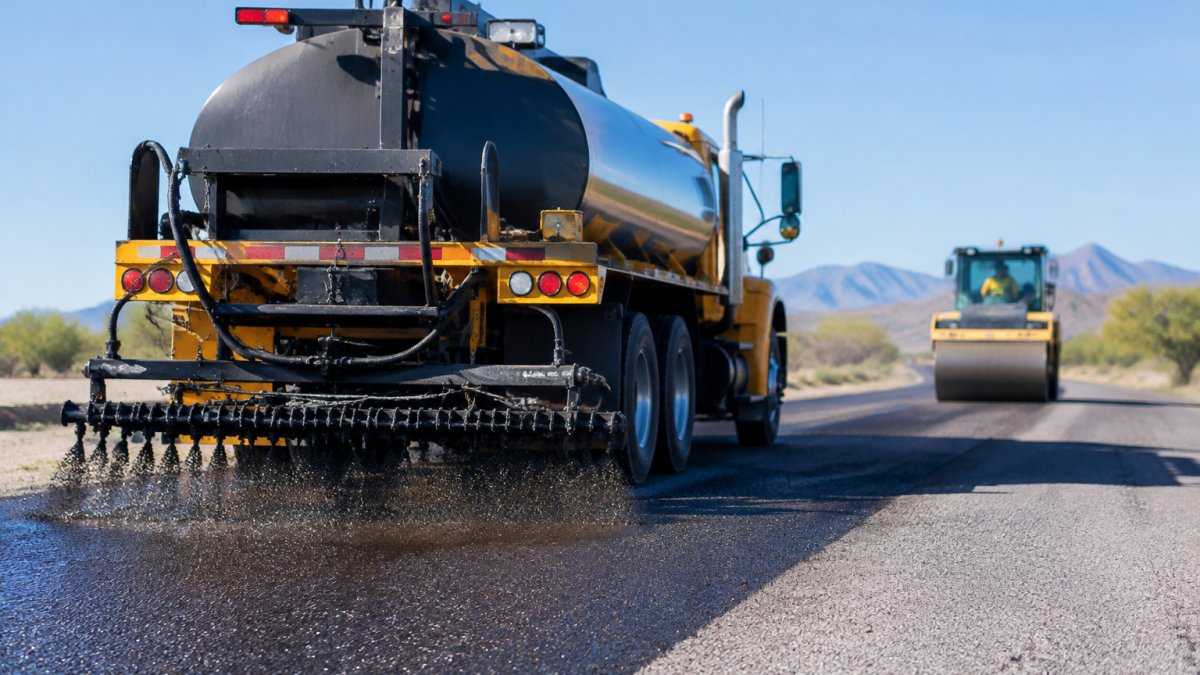
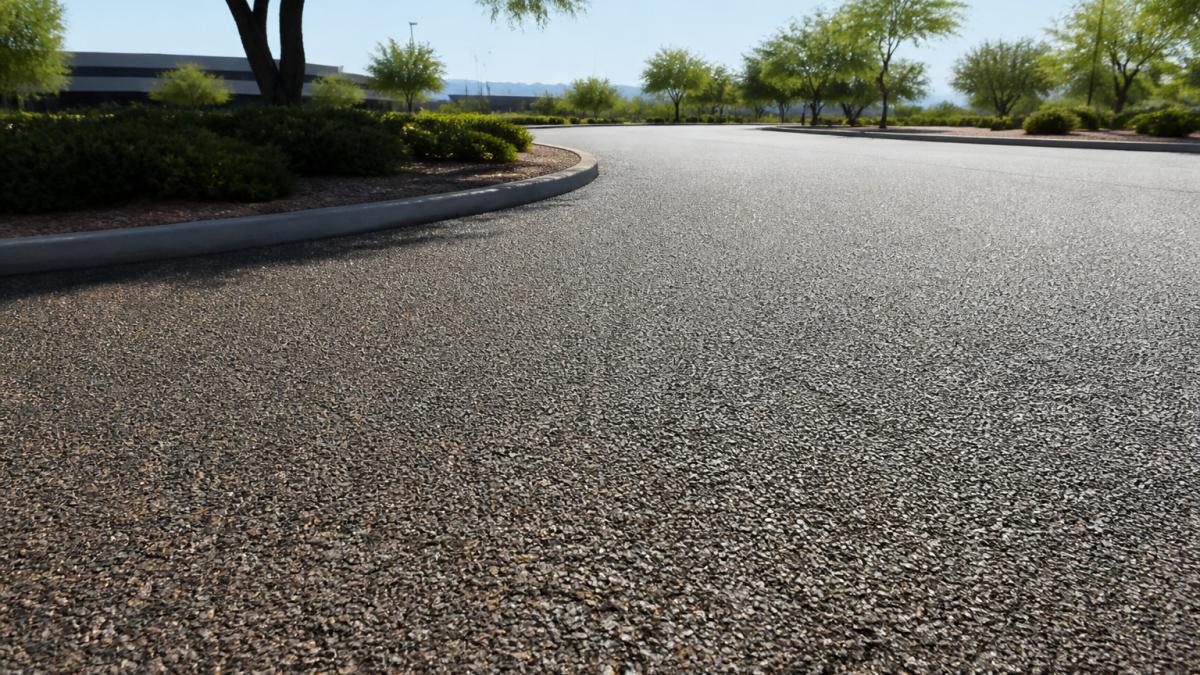
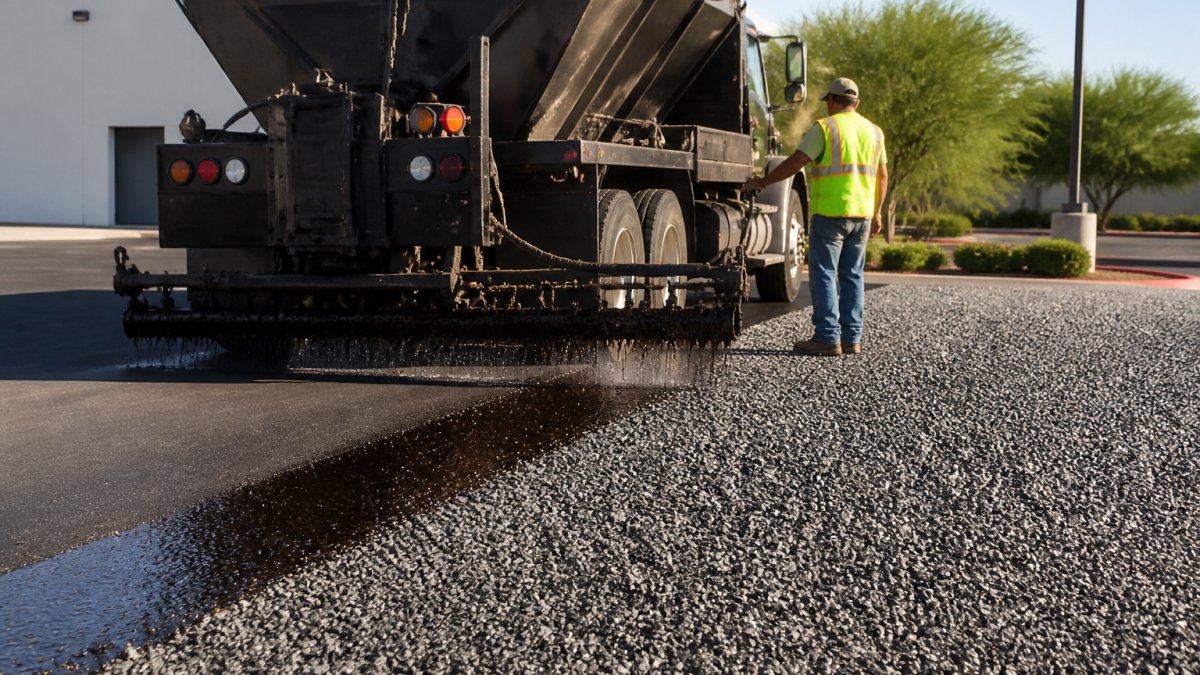
A chip seal is a surface treatment that bonds a layer of aggregate to a sprayed asphalt emulsion. The binder holds the stone in place, and the stone takes the wear. It is a preservation method, not a structural repair, so it works best on a sound base.
Chip seals are generally used for sealing surface cracks, limiting water penetration, and providing an anti-glare surface. A report from the Oregon Department of Transportation identifies these benefits as the main reasons agencies use the treatment. Oregon DOT chip seal design and specifications report
The treatment fits best on low-volume roads, rural routes, and residential streets with moderate traffic. Its limits show up quickly under heavy loads, where aggregate can loosen and the surface can ravel if the binder and stone are mismatched.
Our guide to chip seal covers the service in more detail if you are weighing it against other surface options.
Chip Seal Aggregate Size: Matching Stone to Truck Loads
Aggregate size controls how the surface handles load. Larger stone generally resists abrasion better under heavy tires, but it must be embedded firmly enough to stay put. Smaller stone gives a tighter surface but wears faster under turning trucks.
Stone quality matters as much as size. Hard, angular aggregate bonds better to the binder and resists polishing. Soft or rounded stone breaks down under repeated loads and can leave the surface rough and loose.
Choosing Aggregate by Traffic Severity
Match the stone to the traffic. Light residential traffic can use a finer gradation. Heavy truck routes need coarser, harder stone set into a binder that can flex without cracking.
For a step-by-step method, see our guide on choosing chip seal aggregate size.
Chip Seal vs. Hot Mix Asphalt for Truck Traffic
Hot mix asphalt is a structural layer that carries load through its full thickness. Chip seal is a thin surface treatment. For sustained heavy truck traffic, hot mix usually provides the stronger, more durable surface. Chip seal generally costs less up front and can be applied quickly, which makes it attractive for budget-limited projects.
The tradeoff is lifespan under heavy loads. Chip seal can serve well on light to moderate roads, but it is not designed to replace a structural overlay on a truck route. Compare the traffic count, the budget, and the expected service life before deciding.
Single, Double and Triple Course Designs Compared
Chip seal course count is the first design lever for a truck route, and it is the one most often underspecified. A single, double, or triple course is not a cosmetic upgrade, each additional course changes the aggregate interlock, the binder demand, and the failure mode under axle loads.
A single-course chip seal applies one shot of emulsion and one layer of aggregate. It is the least expensive design and works on low-volume roads, residential streets, and parking areas with light vehicles. Under loaded trucks, a single course has limited reserve: the stone relies on a thin binder film and the underlying pavement to hold it, so it is prone to aggregate loss at turning points and to flushing when the binder rises in hot weather.
A double-course chip seal applies a second binder and aggregate layer, usually with a smaller top-size stone over a coarser base course. The interlock between the two layers gives the surface more resistance to shear from braking and turning trucks, and the second course covers the first so that any early stone loss does not immediately expose the binder. A double course is often considered a minimum for roads with regular heavy-truck traffic, particularly where trucks slow, stop, or turn.
A triple-course chip seal adds a third layer and is the most robust of the three. It is used where truck volumes are high, where grades or curves concentrate shear, or where the existing pavement is sound but the owner wants a longer service interval before a structural overlay. The trade-off is cost and construction time: each course adds binder, aggregate, and a curing window, and the finished surface sits slightly higher, which matters at curb lines, drainage inlets, and bridge joints.
A practical way to compare the three is by what each is designed to resist. Single course: weathering and light traffic. Double course: moderate truck traffic with some turning and braking. Triple course: sustained heavy-truck traffic, industrial access, and locations where shear stress is concentrated. None of the three fixes a weak base, if the pavement underneath is rutted or failing, a multi-course seal will simply fail more slowly.
Watch out: Adding courses without increasing binder grade or aggregate quality produces a thicker surface that still ravels; course count and binder/aggregate selection have to be specified together.
The article distinguishes the three course designs by what each is built to resist.
| Design | Best for | Key difference |
|---|---|---|
| Single course | Low-volume roads, residential streets, light vehicles | One binder and aggregate layer; least expensive |
| Double course | Moderate truck traffic with turning and braking | Second layer adds interlock and covers early stone loss |
| Triple course | Sustained heavy-truck traffic and industrial access | Most robust; higher cost and longer construction time |
Chip Seal Durability and Lifespan Under Trucks
Durability under trucks is not a single number, it is the result of how the binder, aggregate, base, and drainage interact under repeated axle loads. A chip seal’s service life depends heavily on the base, binder, and aggregate, and performance drops quickly when any of those inputs is wrong.
The failure modes under trucks are predictable, and each has a cause and a preventive fix:
- Bleeding (flushing): Binder rises to the surface in hot weather and creates a slick, shiny film. It is caused by too high an emulsion application rate, a soft binder, or a lack of aggregate to absorb the binder. Prevention starts with a binder grade matched to the climate and a chip application rate calibrated to the aggregate gradation.
- Aggregate loss and raveling: Stone strips off the surface, often starting at turning points, intersections, and edges. Causes include insufficient binder, dirty or rounded aggregate, cold application temperatures, and traffic opened too early. Prevention is clean, angular stone, proper emulsion rate, and a curing and brooming sequence that keeps trucks off until the stone is embedded.
- Rutting and shoving: Surface deformation under load, usually a sign that the base or the underlying asphalt is failing rather than the seal itself. A chip seal is a preservation treatment, not a structural fix; if the base is rutted, the seal will mirror the rut.
- Edge failure: The seal breaks down at the pavement edge where trucks track and where water collects. Wider edge treatment, proper shoulder drainage, and sealing the edge joint reduce it.
- Reflective cracking: Cracks in the underlying pavement telegraph through the seal. Crack sealing before the chip seal and a binder with some flexibility slow the reflection.
Base condition and drainage are the two variables that most often decide whether a chip seal lasts. A sound, well-drained base lets the seal do its job; a saturated or rutted base guarantees early failure regardless of binder or aggregate quality. See our breakdown of how long chip seal lasts for the real lifespan data behind those estimates.
Chip Seal Application Best Practices for Heavy-Duty Surfaces
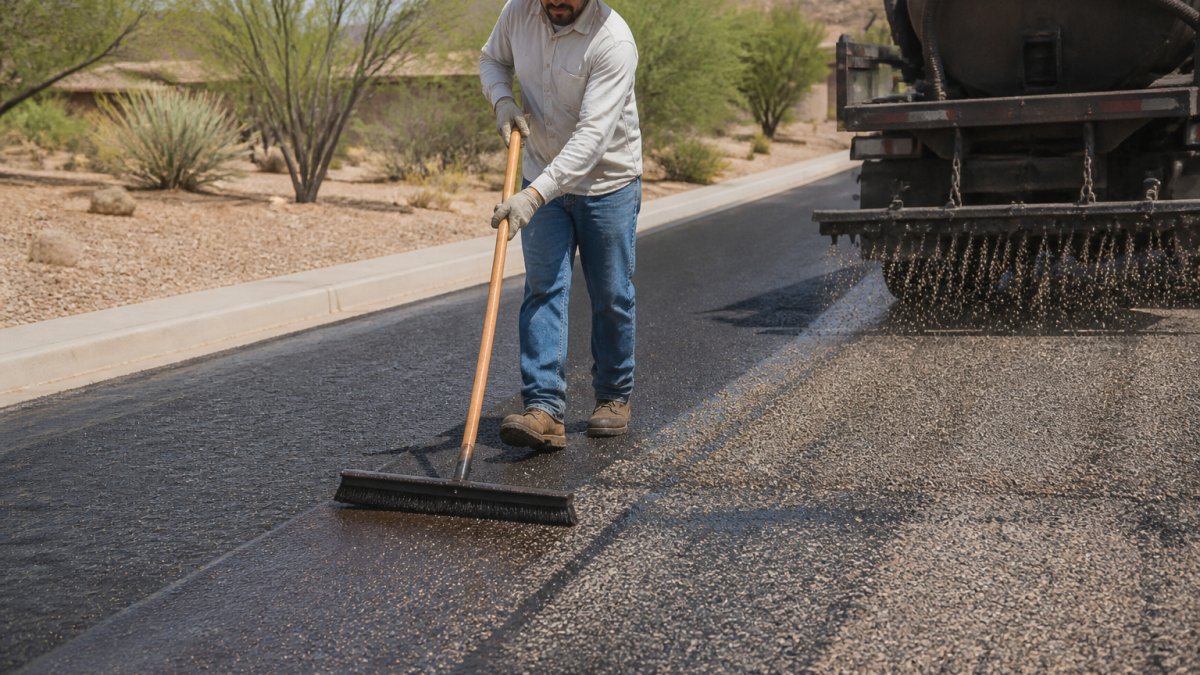
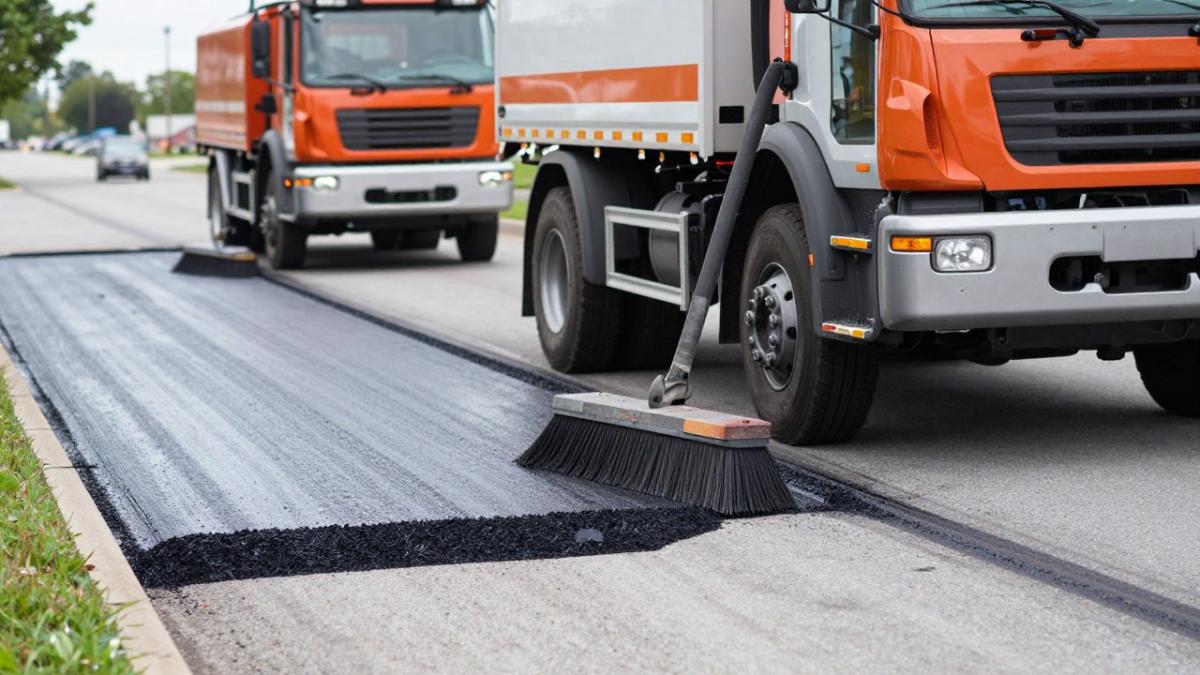
Good application starts with surface preparation. Cracks should be sealed, loose material removed, and the base checked before any emulsion goes down. Fresh chip seals should be driven slowly, at 25 mph or less, until they are broomed and opened to normal traffic, according to American Association of State Highway and Transportation Officials guidance. AASHTO chip seal introduction and construction guidance
Fog sealing after chip sealing is reported to improve chip retention and reduce loose-rock complaints. A Minnesota transportation research article describes this benefit, though it gives no numerical effect size. Minnesota transportation research on fog seals after chip sealing
Watch out: Opening a chip seal to heavy trucks before the stone has set can strip aggregate within days. Hold traffic to slow speeds until broom-off is complete.
For budgeting factors that affect a commercial job, read our guide to commercial chip seal project costs.
Booking a Traffic Assessment for Your Chip Seal Project
Before you commit to a surface, a traffic assessment shows whether chip seal fits your truck volumes or whether a stronger system is needed. The assessment covers traffic counts, axle loads, turning patterns, and the condition of the existing pavement.
Pricing depends on surface area, traffic conditions, and project timing, so request a current quote from Global Paving before budgeting. If you are comparing contractors, our guide on choosing a commercial chip seal contractor lists the questions worth asking.
Frequently Asked Questions
Can chip seal withstand frequent heavy truck traffic?
Chip seals are generally recommended for roads carrying below 3,000 average annual daily traffic per lane, so frequent heavy truck traffic is a caution sign rather than an automatic fit. Research from the North Carolina Department of Transportation examined polymer-modified chip seals specifically to extend use to higher-volume roads, but the supplied results do not set a specific truck-traffic threshold. For sites with constant delivery trucks and forklifts, have an engineer review traffic counts and axle loads before committing to a chip seal. Pricing depends on quantity, dates and delivery; contact Global Paving for a quote tailored to your site.
How soon can heavy trucks drive on a new chip seal?
Fresh chip seals should be traveled slowly, at 25 mph or less, until the surface is broomed and opened to normal traffic, according to American Association of State Highway and Transportation Officials guidance. Loose aggregate is the main risk in the first days, since it can be thrown by tires and damage windshields and vehicles. Keep heavy trucks off the surface until the crew confirms the aggregate is seated and swept. Your contractor should set a clear opening schedule so deliveries can be planned around it.
Is chip seal as durable as hot mix asphalt for commercial traffic?
Chip seal is a surface treatment that seals cracks, limits water penetration and provides a skid-resistant surface, according to Oregon Department of Transportation findings. It is typically less structurally robust than hot mix asphalt, which is why traffic volume and axle loads should drive the choice. Multiple-course chip seals are used when more durability is warranted, but the supplied research does not quantify lifespan differences. Compare both options against your actual truck counts and pavement condition before deciding.