Quick Summary
Commercial chip seal cost typically runs about $2 to $3 per square foot for a single seal and $3 to $5 per square foot for a double seal, though those published figures are mostly for driveways. Heavy truck traffic, prep work and site conditions can push a commercial lot’s chip seal cost higher.
- Single chip seal is published at $2 to $3 per square foot, double at $3 to $5.
- Those published ranges describe residential driveways, not commercial lots.
- Crack filling and patching are priced separately and often matter as much as the seal.
- Heavy trucks and forklifts usually call for a double seal rather than a single.
- Ask each bidder whether prep, mobilization and traffic control are included before comparing.
Table of Contents
- What Commercial Chip Seal Cost Per Square Foot Looks Like in 2026
- Single Seal Versus Double Seal Pricing for Commercial Lots
- Chip Seal Cost Calculator: Inputs to Use for a Realistic Estimate
- Chip Seal vs Asphalt Cost: Where the Price Gap Comes From
- Chip Seal Lifespan and What It Means for Lifecycle Cost
- Commercial Parking Lot Resurfacing Cost and When Chip Seal Doesn’t Fit
- Getting a Chip Seal Quote That Shows Its Scope and Inclusions
- Frequently Asked Questions
What Commercial Chip Seal Cost Per Square Foot Looks Like in 2026
Commercial chip seal pricing is hard to pin down from public sources. The figures available for 2026 are mostly built for residential driveways, not commercial lots, so treat them as a starting point rather than a bid. Published estimates place single chip seal at $2 to $3 per square foot and double chip seal at $3 to $5 per square foot (Civil Engineering Daily, Tar and Chip Driveway Cost Calculator).
Global Paving provides chip seal for commercial and industrial properties, and our quotes depend on the area, surface condition and scope. Pricing depends on quantity, timing and site conditions.
For a commercial lot, the cost per square foot is shaped by three things: the seal type, the condition of the existing pavement, and the size of the job. Prep work such as crack filling and patching often matters as much as the chip seal itself.
Single Seal Versus Double Seal Pricing for Commercial Lots
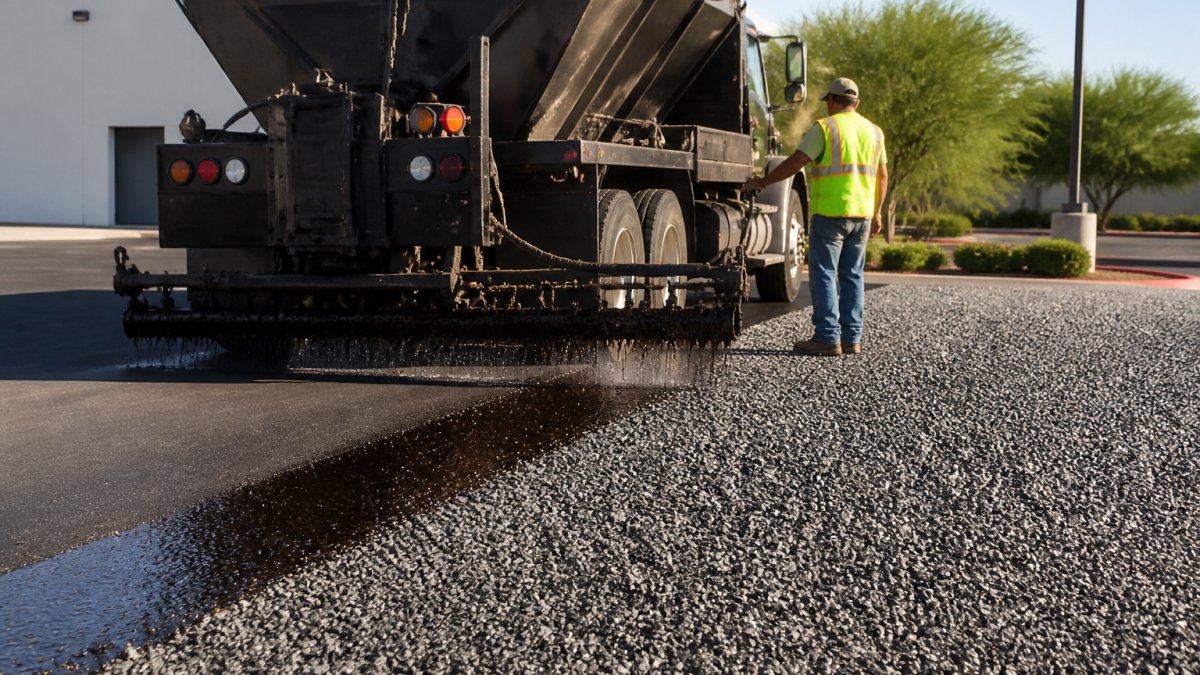
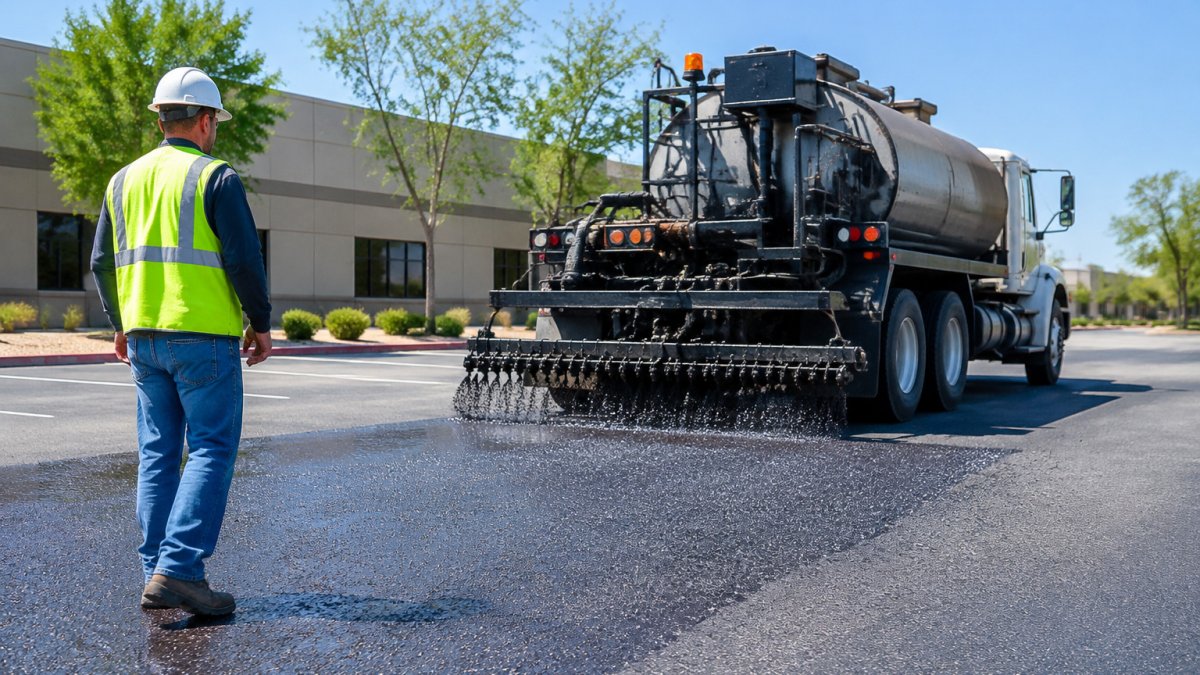
A single chip seal applies one layer of asphalt emulsion and one layer of aggregate. You can compare the chip seal service offering and its single and double options before deciding. Published driveway estimates put the double seal at a higher per-square-foot range than the single seal (Civil Engineering Daily, Tar and Chip Driveway Cost Calculator).
On a commercial lot, the choice depends on traffic. A single seal can suit lightly used areas. Heavier traffic from delivery trucks and forklifts often calls for a double seal, because the extra layer gives more coverage and durability. The right choice depends on your traffic and surface, which is best assessed on site.
Watch out: choosing the cheaper single seal for a lot that carries heavy vehicles can leave you with early raveling and a second treatment sooner than planned.
The table below sets the two seal types side by side, using the traffic guidance and cost points from the section above.
| Seal type | Best for | Key difference |
|---|---|---|
| Single seal | Lightly used areas | One layer of emulsion and aggregate |
| Double seal | Heavier traffic from trucks and forklifts | Two layers, more coverage and durability |
| Single seal | Lower per-square-foot range | Less material and labor |
| Double seal | Higher per-square-foot range | Extra layer adds cost |
Chip Seal Cost Calculator: Inputs to Use for a Realistic Estimate
A chip seal cost calculator is useful for a rough number, but its output is only as good as its inputs, and most public calculators are built around residential driveways. For a commercial lot, the inputs that move the number most are project area, seal type, prep scope, traffic loading, and mobilization distance. Enter the square footage of the paved area to be treated, not the building footprint, and add the seal type, the expected traffic, and whether crack sealing or patching is needed.

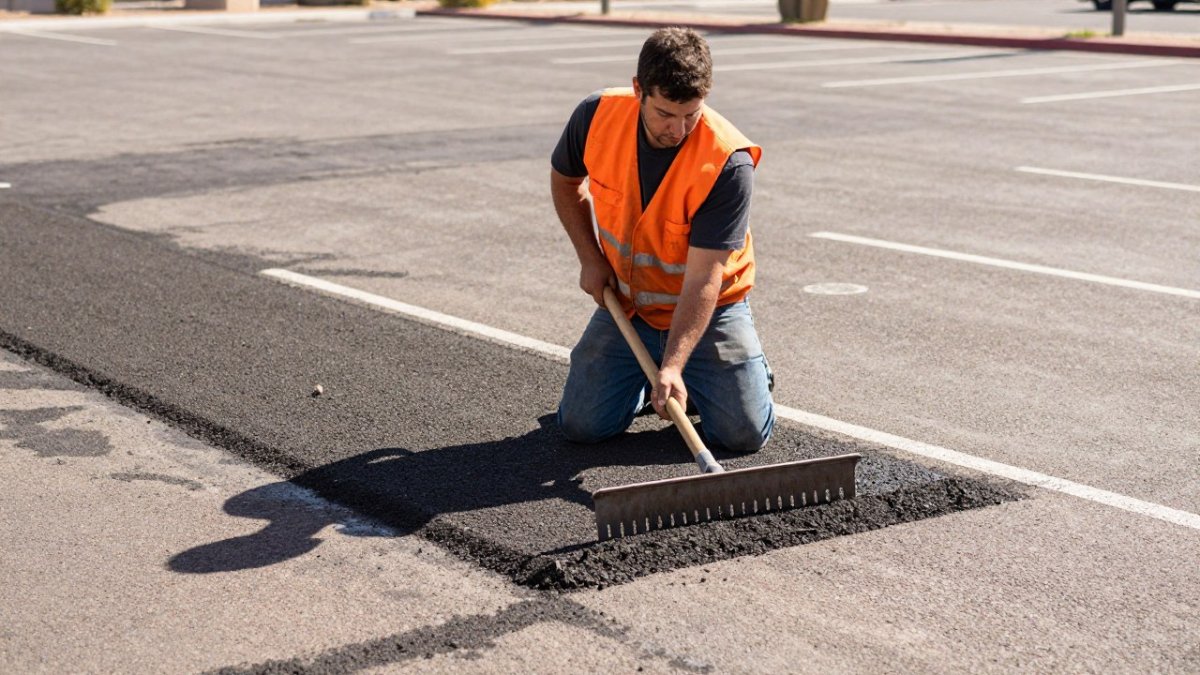
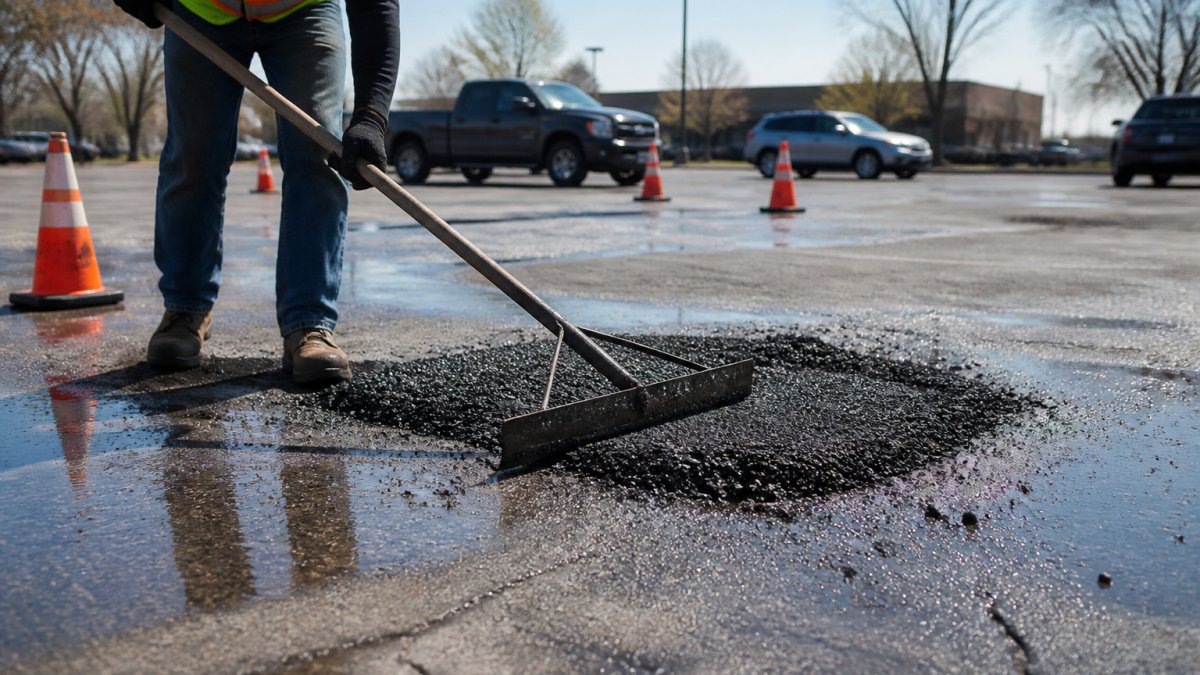
Leave out the prep work, and the estimate will come in low. For a deeper breakdown of what drives chip seal resurfacing costs, read How Much Does Chip Seal Road Resurfacing Really Cost?. Cracks, potholes and eroding edges have to be repaired before the seal goes down, and those repairs are priced separately. Ask any calculator, and any contractor, what the number includes.
For a realistic estimate, collect the following before you request a quote:
- Total square footage of the area to be treated
- Current surface condition, including cracks, potholes and edge erosion
- Traffic type, such as cars only or trucks and forklifts
- Preferred timing, since a phased schedule can change mobilization costs
- Distance from the contractor’s yard, which drives mobilization charges
- Whether traffic control, striping removal, or after-hours work is required
Turning Calculator Inputs into Commercial Budget Ranges
A calculator gives a unit price; a budget needs a project size. The same per-square-foot rate does not apply evenly across lot sizes, because mobilization, equipment setup, and minimum charges are spread over more area as the job grows. A common pattern in commercial paving is that small jobs carry a disproportionate share of fixed costs, while large, open areas with good access price closer to the material-and-labor rate.
Square-footage bands can serve as a rough planning framework rather than a bid. Mobilization and prep allowances change the total at every size:
Minimum Charges and Economies of Scale
Contractors often carry a minimum job charge because the cost of moving equipment and a crew to the site does not shrink with the size of the lot. When you compare bids, ask each contractor whether the quote includes a minimum charge, what the mobilization fee is, and how the unit price changes if you add adjacent areas to the same mobilization. Combining a parking lot with a private road or a second entrance in one work order is a common way commercial owners lower the effective rate.
For current pricing and a site-specific quote, contact Global Paving directly. We will walk your lot, identify the prep needs, and give you a written scope you can compare against other bids.
Chip Seal vs Asphalt Cost: Where the Price Gap Comes From
Chip seal usually costs less per square foot than new asphalt paving. Published comparisons place commercial asphalt parking-lot paving at $2 to $4.50 per square foot (LiteLoad Asphalt, Residential and Commercial Asphalt Paving Costs). Those figures are for asphalt, not chip seal, so they show the benchmark rather than your price.
The gap comes from what each method does. Chip seal is a surface treatment. It protects and renews an existing pavement but does not add structural depth. Asphalt paving rebuilds the surface and can add base and thickness. A paving contractor makes the point plainly: chip seal costs less partly because it does less structural work (Bart’s Asphalt, Asphalt vs Chip Seal: Cost, Durability & Best Uses).
So a lower chip seal price is not automatically a better deal. If the base is failing, a surface seal will not fix it.
Chip Seal Lifespan and What It Means for Lifecycle Cost
Chip seal lifespan depends on traffic, climate, the quality of the existing pavement, and how well the surface was prepared. A properly applied chip seal on a well-prepared surface typically has a service interval measured in years rather than decades, and heavy truck traffic, freeze-thaw cycles, and poor drainage can shorten that interval. Rather than rely on a single national number, ask each contractor for the expected service interval for your traffic level and climate, and compare total cost across that interval.
What matters for lifecycle cost is how often you reseal and what else the pavement needs between seals. A chip seal that needs reapplication sooner than expected costs more over time, even if the first price was low. The same logic applies to prep: a lot with untreated cracks will ravel and lose aggregate faster, pushing the next treatment forward.
A Commercial Lifecycle Comparison Framework
Use a simple total-cost-of-ownership model over a planning horizon, and compare chip seal against asphalt and gravel on the same basis:
- Initial cost: chip seal is a surface treatment and generally prices below new asphalt paving per square foot, because it does not add structural depth. Gravel has a low initial cost but requires frequent replenishment and grading.
- Maintenance frequency: chip seal needs periodic resealing and crack filling; asphalt needs crack sealing, patching, and eventual mill-and-overlay; gravel needs regrading and periodic aggregate top-ups. Ask each contractor for their expected maintenance interval at your traffic level.
- Service life and replacement: chip seal renews the surface but does not restore a failing base. Asphalt overlays and reconstruction reset the clock at a higher cost. Gravel has the shortest effective service cycle for commercial traffic.
- Operational disruption: chip seal generally reopens to traffic relatively quickly compared with full-depth paving, which matters for parking lots and access roads where downtime has a business cost. Factor reopening time and traffic control into the comparison, not just the invoice.
- Lifecycle total: multiply the initial cost by the number of treatments expected over the horizon, add routine maintenance, and compare the totals. A lower first price with a shorter interval can lose to a higher first price with a longer one.
Watch out: comparing a chip seal bid against an asphalt overlay bid on first cost alone ignores that the two treatments do different structural work, the overlay may reset the pavement’s life while the seal only protects it.
Maintenance Planning for Commercial Properties
A practical maintenance plan treats chip seal as one step in a cycle rather than a one-time purchase. Most commercial owners get the best result by sealing while the pavement is still sound, addressing cracks and drainage first, and scheduling resealing before surface raveling begins. Budgeting for resealing on a predictable interval, and holding a reserve for prep repairs, is more reliable than reacting after a failure. When you compare bids, ask each contractor for their expected service interval for your traffic level, and compare the total cost across that interval, not just the first invoice.
Commercial Parking Lot Resurfacing Cost and When Chip Seal Doesn’t Fit
Chip seal is not the right answer for every lot. Federal guidance on chip seal sets traffic limits, including average daily traffic and the share of commercial vehicles, and says the treatment should stay within those limits (Federal Highway Administration, Chip Seal Checklist).
If your lot has structural damage, poor drainage, or heavy truck traffic beyond those limits, a surface seal will not hold. In those cases, resurfacing or repaving costs more up front but may last longer. For a fuller view of budgeting asphalt repair and maintenance, see How To Budget For Asphalt Repair Maintenance.
Getting a Chip Seal Quote That Shows Its Scope and Inclusions
A useful quote states exactly what it covers. Ask each bidder to list prep work, crack sealing, patching, the seal type, the number of layers, and cleanup. Ask whether traffic control and mobilization are included. A low bid that leaves out prep is not a low price.
Compare bids on the same scope and the same square footage. If you are evaluating contractors, How Do You Choose a Commercial Chip Seal Contractor? explains what to look for. For a company with local experience in this work, How To Find The Best Asphalt Paving Company In Phoenix covers what to check.
For current pricing and a site-specific quote, contact Global Paving directly. We will walk your lot, identify the prep needs, and give you a written scope you can compare against other bids.
Frequently Asked Questions
How much does chip seal cost per square foot?
Most published chip seal estimates are written for residential driveways rather than commercial lots, so they are a starting reference rather than a commercial quote. Final pricing depends on surface condition, project size, prep work, and mobilization. Contact Global Paving through its website for a site-specific estimate.
Is chip seal cheaper than asphalt for a commercial parking lot?
Chip seal is generally priced below asphalt paving on a per-square-foot basis. The gap narrows once you account for base repairs and drainage work. Chip seal does less structural work, so a lot that needs base repair may need more than a surface treatment.
How long does chip seal last on a commercial lot?
Chip seal lifespan depends on traffic volume, the share of heavy vehicles, climate, and how well the surface was prepared. Traffic levels, especially heavy vehicles, affect how long chip seal lasts, so a lot with heavy delivery trucks and forklifts may wear faster than a light-use site. Ask any contractor for expected service life under your specific traffic conditions before comparing bids.
Can chip seal be applied over existing asphalt?
Chip seal is typically placed over a sound existing surface, but cracks, potholes, and eroding edges need repair first. Surface preparation is a common cost driver because it affects how well the aggregate bonds. Global Paving can assess your existing pavement and explain which repairs must come before any surface treatment.