Last Updated: October 26, 2026
Quick Summary
Most chip seal surfaces are safe for light traffic within 24 to 48 hours, but heavy trucks and delivery vehicles often need 48 to 72 hours or longer. The real wait depends on your climate, the emulsion used, and how heavy your vehicles are, so confirm the sweep is finished and the binder has broken before you drive.
- Passenger cars can usually roll across a chip-sealed surface after 24 to 48 hours.
- Heavy trucks and forklifts should wait 48 to 72 hours or longer before driving.
- Chip seal is ready when the binder has broken, aggregate is embedded, and loose chips are swept.
- Keep speeds under 10 mph and avoid sharp turns if you must drive early.
- Rain in the first 24 hours can dilute the binder and float the chips.
Table of Contents
- The Short Answer: Chip Seal Wait Times by Traffic Type
- Chip Seal Curing Time: How Long Until the Surface Is Ready
- When Can I Drive on a Newly Sealed Driveway?
- Chip Seal Road Treatment Weather Requirements
- Loose Gravel After Chip Seal: What to Do Before You Drive
- How to Tell When Chip Seal Is Ready for Traffic
- What to Do If You Must Drive Before the Wait Time Is Up
- Scheduling Your Chip Seal Project with Global Paving
- Frequently Asked Questions
The Short Answer: Chip Seal Wait Times by Traffic Type
Most chip seal surfaces are safe for light traffic within 24 to 48 hours, according to New England Asphalt’s guidance on chip seal lifespan. That is the short answer for how long before driving on chip seal, but it comes with a catch. The real wait depends on your climate, the emulsion used, and how heavy your vehicles are. Push the timeline and you risk loose chips, windshield damage, and a surface that fails early. For the full chip seal service details, see our dedicated page.
Light Vehicles vs. Heavy Trucks
Passenger cars can usually roll across a chip-sealed surface after 24 to 48 hours. Heavy trucks and delivery vehicles need more time, often 48 to 72 hours or longer, because their weight pushes aggregate deeper into the binder before it fully sets. The NCHRP Synthesis 342 on chip seal best practices notes that some agencies open roads to reduced-speed traffic in as little as 10 minutes, but that is a decision made under controlled traffic, not a green light for full-speed access.
| Traffic Type | Typical Wait | Key Risk If Rushed |
|---|---|---|
| Passenger cars | 24-48 hours | Loose chips, minor scuffing |
| Light trucks and vans | 48 hours | Aggregate displacement |
| Heavy trucks, forklifts | 48-72+ hours | Rutting, binder failure |
| Bicycles and foot traffic | 24 hours or less | Sticky surface, tracking |
Chip Seal Curing Time: How Long Until the Surface Is Ready
Chip seal curing time is the window between application and the moment the asphalt emulsion sets hard enough to hold the stone chips in place. This is not the same as drying. The emulsion must “break,” meaning the water evaporates and the binder bonds to the aggregate. Warm, dry weather speeds this up. Cool, humid weather slows it down. A long-term field performance study published in Engineering Proceedings found that chip seal treatments extended pavement life by 4 to 17 years, depending on the condition of the road before treatment.
When Can I Drive on a Newly Sealed Driveway?
You can usually drive on a newly sealed driveway after 24 to 48 hours, but the answer depends on whether it is a public road or a private driveway. Private driveways often cure faster because they sit in full sun and see less traffic. If you are comparing treatments, our asphalt paving page covers an alternative for driveway owners. Public roads may stay closed longer for sweeping and traffic control.
Public Roads vs. Private Driveways
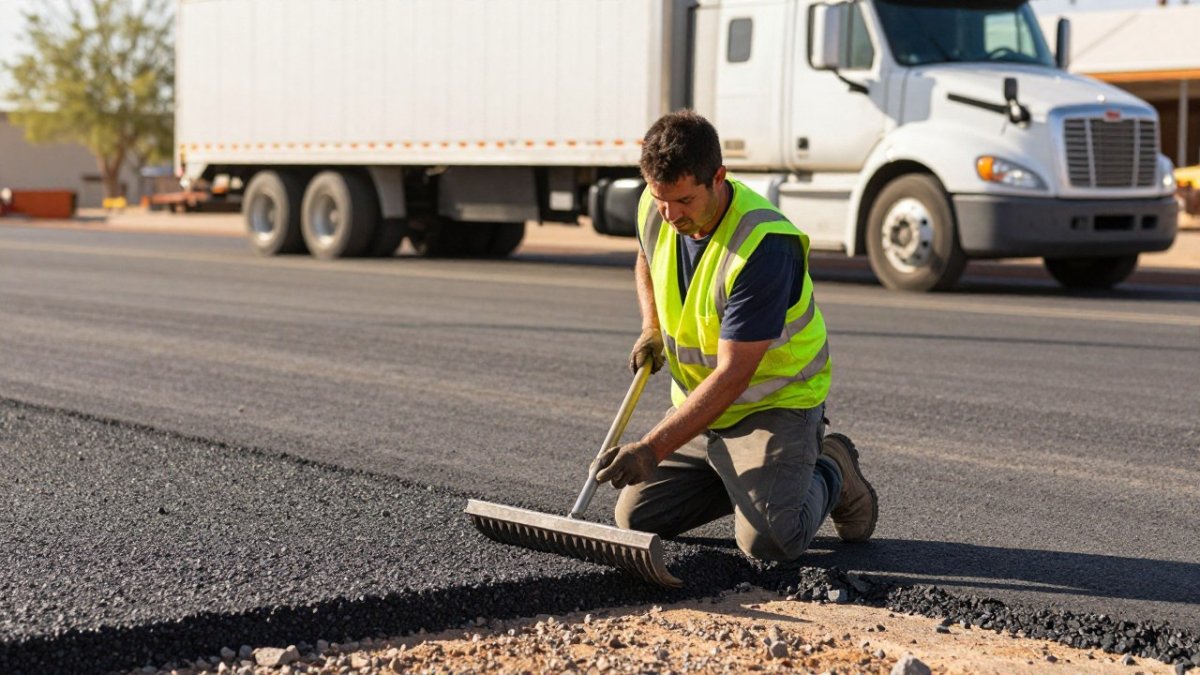
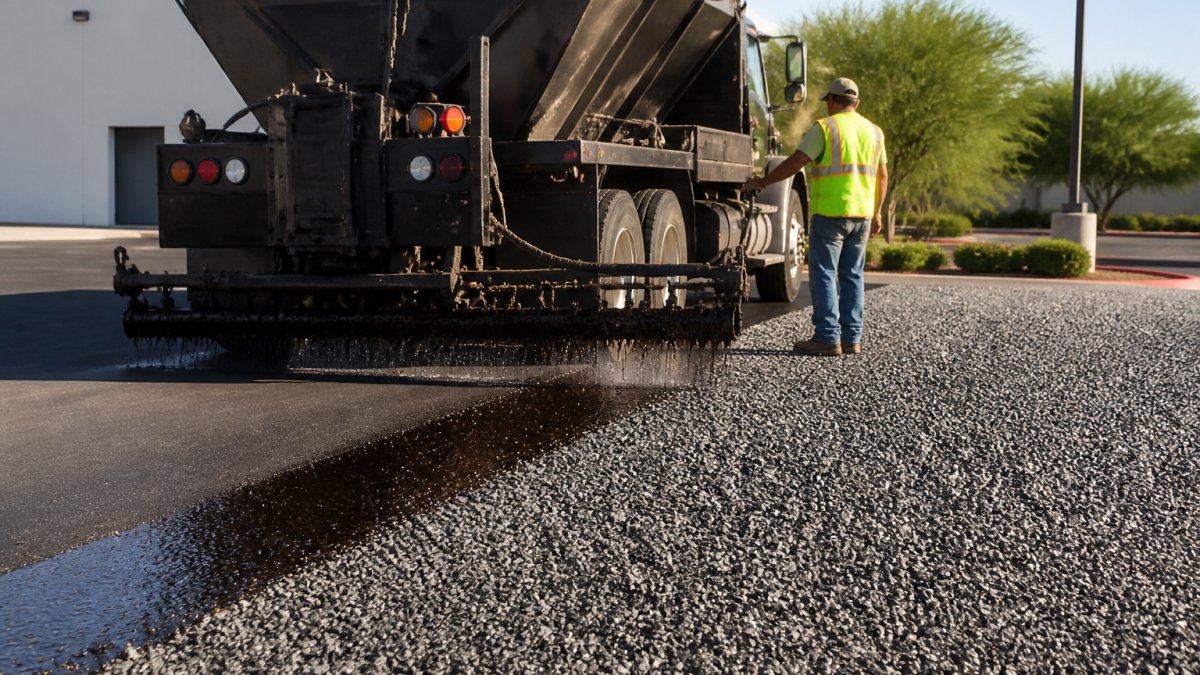
Road crews usually keep a chip-sealed road closed until sweeping is done. Some programs open roads to slow-moving traffic right after sweeping, while others wait a full day or more. Private driveways skip the traffic-control step, so the homeowner decides when to open them.
Chip Seal Road Treatment Weather Requirements
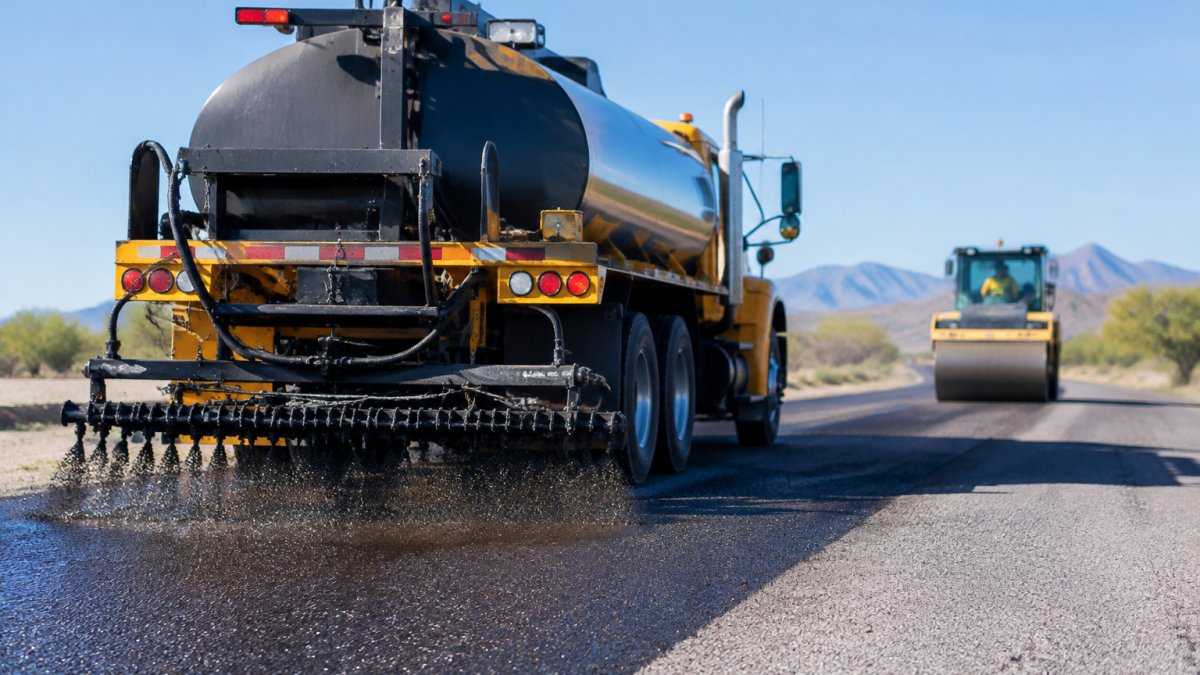
Chip seal road treatment weather requirements are strict because the emulsion has to break and the aggregate has to embed before traffic loads the surface. The common field threshold is a dry surface with air temperatures staying above roughly 50°F during application and through the first several hours of curing, but that number is a floor, not a guarantee. What actually controls reopening is how fast the asphalt emulsion loses its water and turns from a brown, milky liquid into a black, sticky binder that locks the chips in place.
How Temperature, Rain, Humidity, and Shade Change the Break
- Heat: Warm air and warm pavement speed water evaporation and shorten the break. But extreme heat can keep the binder soft and tacky after the break, so tires may track binder onto adjacent pavement even when the surface looks black. In practice, a hot afternoon can mean the surface is ready to accept slow traffic sooner but still needs a few hours before it stops being sticky.
- Rain: Moisture is the biggest threat in the first 24 hours. Rain before the emulsion breaks can dilute the binder, float the chips, and wash away the tack coat, which is why most crews will not seal when rain is in the forecast. Rain after the break is less damaging but can still loosen chips that have not fully embedded.
- Humidity: High humidity slows evaporation and pushes back the break. A cool, humid morning can add hours to the wait even if the afternoon high looks favorable. This is why coastal and river-valley schedules often run later in the day than desert schedules.
- Cold nights: A warm day followed by a cold night can stall curing. The emulsion may skin over on top while remaining soft underneath, so a surface that felt firm at 4 p.m. can be tender again the next morning.
- Shade and damp pavement: Pavement under trees, bridge shadows, or building shade cures more slowly than full-sun pavement. Damp pavement from morning dew or irrigation should be allowed to dry before sealing, and shaded areas may need extra time before they are opened.
Do not use air temperature alone as a green light. A surface can be above 50°F and still be too tender for traffic if the emulsion has not broken or if rain has compromised the binder.
Weather and Reopening: What to Watch After the Crew Leaves
The first 24 hours matter most. Watch for a color shift from brown to black, which is one visible sign that the emulsion is breaking. Watch for rain, because a single shower before the break can undo a day of curing. And watch the pavement temperature, not just the air temperature: dark pavement in direct sun can run much hotter than the air, which speeds the break but can also keep the binder soft.
Loose Gravel After Chip Seal: What to Do Before You Drive
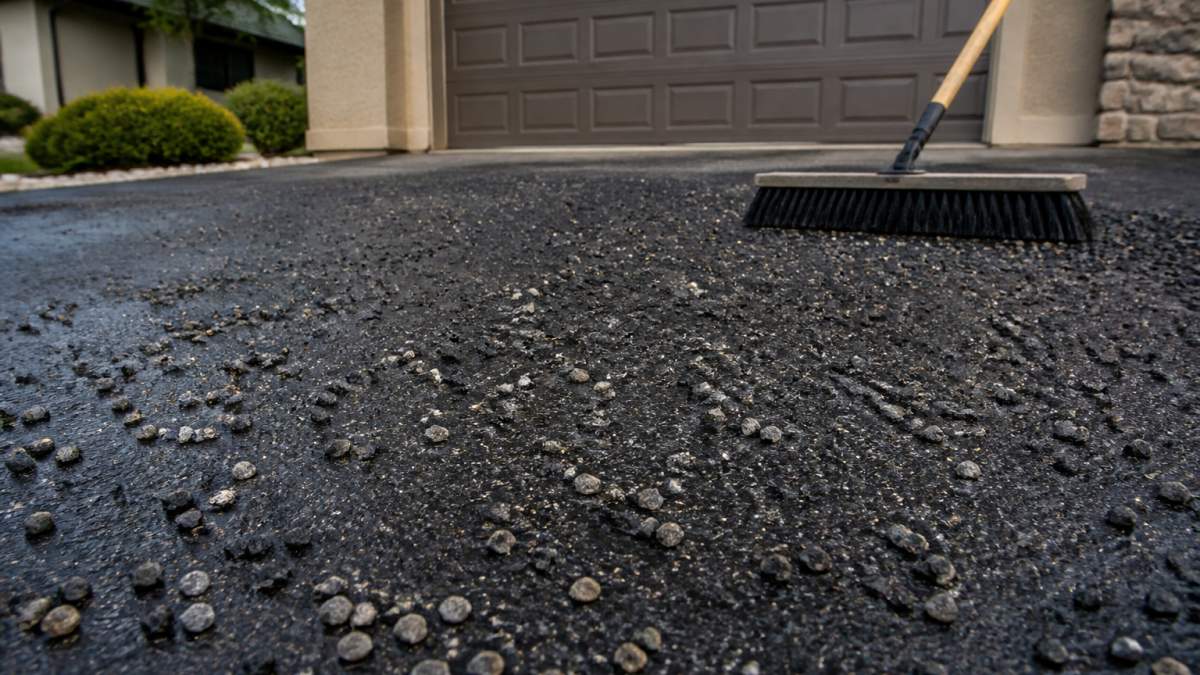
Watch out: driving fast over loose chips in the first week is the most common cause of chip loss and paint damage. Keep speeds low and avoid sharp turns until the surface settles.
How to Tell When Chip Seal Is Ready for Traffic
Chip seal is ready for traffic when the binder has broken, the aggregate is embedded, and loose chips have been swept, but those three conditions are easier to name than to judge.
The Three Readiness Signals
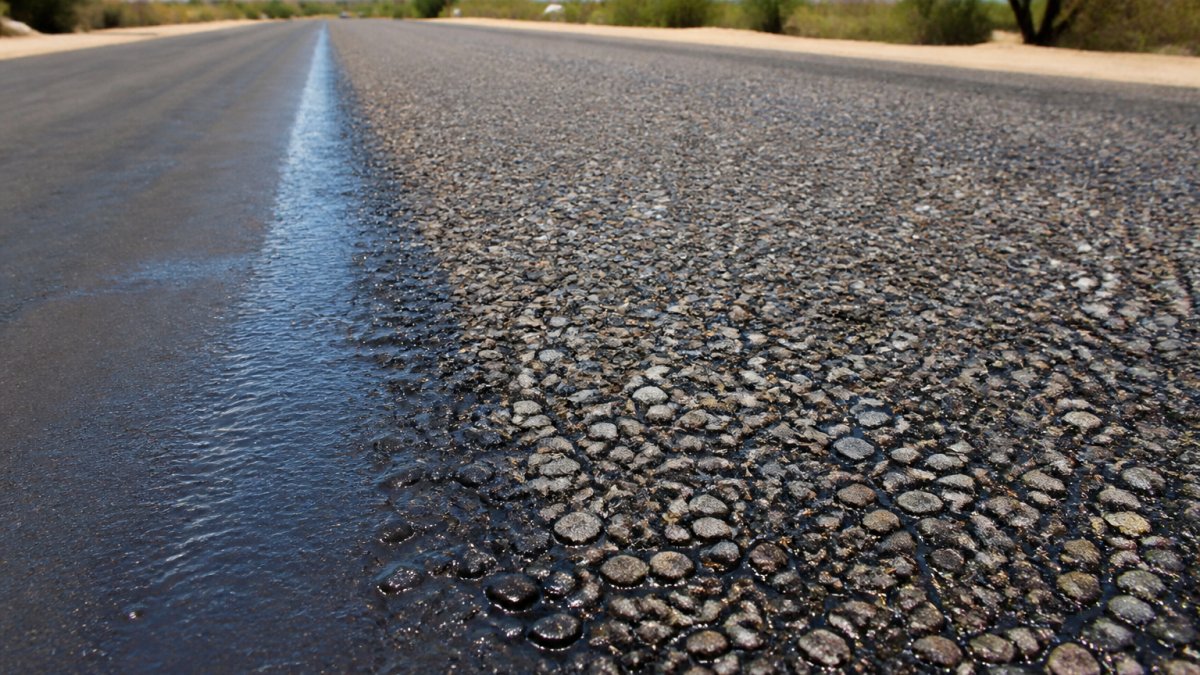
- Binder break: The surface changes from brown or milky to a uniform black, and the binder stops feeling wet or tacky. Press a palm or a bare foot down gently; if the surface pulls or feels sticky, the break is not complete. A shiny patch can mean binder is still fluid.
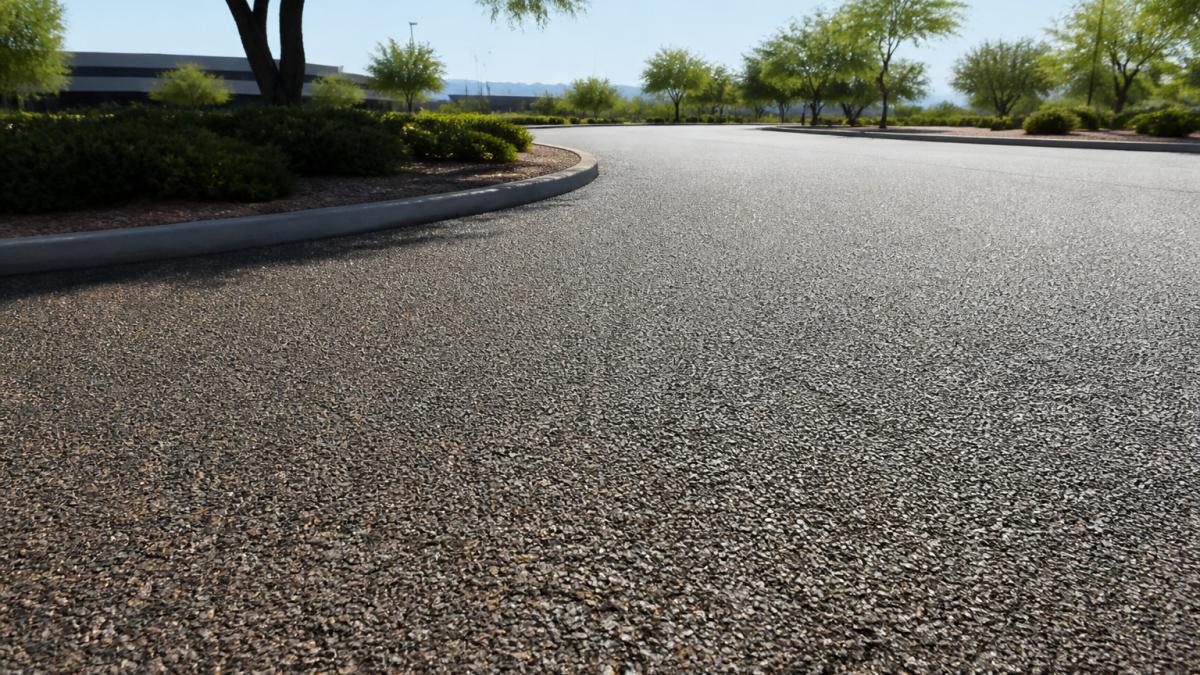
- Aggregate embedment: The chips should sit locked in the binder rather than sliding or rolling underfoot. Scuff a small area with the sole of a shoe; if chips dislodge easily, the surface is not ready. Embedment is what keeps chips from being flung by tires.
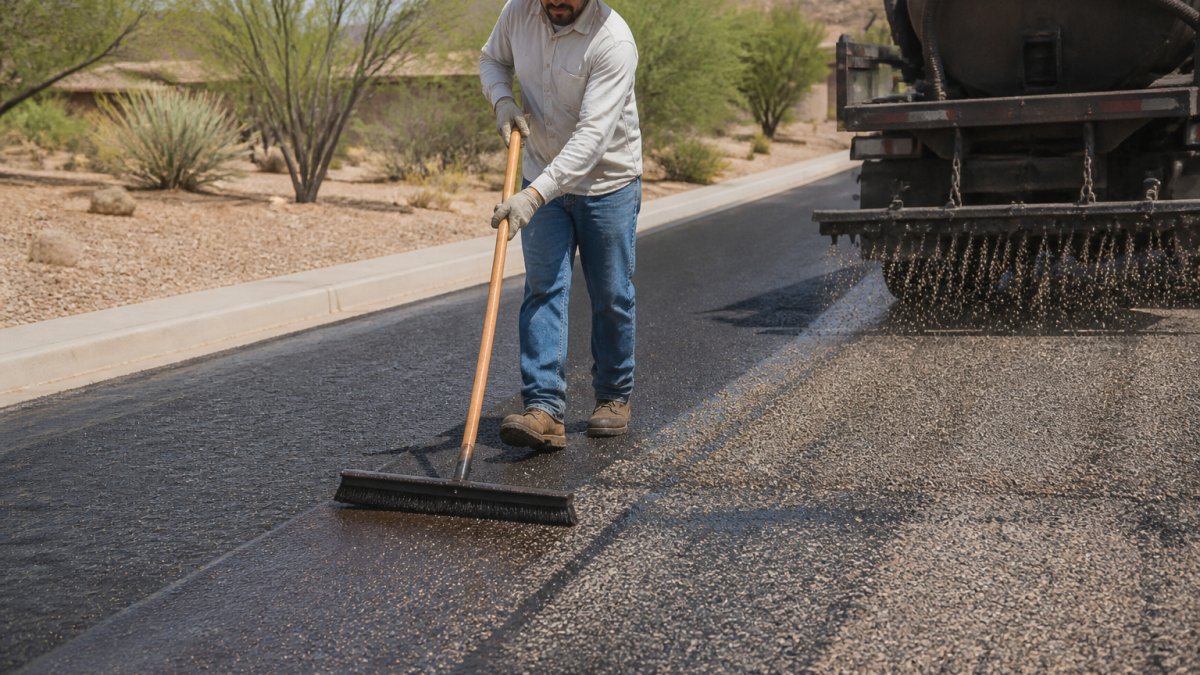
- Loose chip cleanup: The contractor’s sweep removes excess aggregate that did not embed. Driving before sweeping scatters loose chips and can cause windshield damage. Confirm the sweep is finished before opening the surface to normal traffic.
Readiness by Vehicle Type and Speed
- Passenger cars: The first vehicles to be allowed back are usually passenger cars at reduced speed. Slow, straight-line driving is the least demanding use of a new seal.
- Motorcycles and bicycles: Two-wheeled traffic is more vulnerable to loose chips and to a tender surface. Riders should wait until sweeping is complete and the surface is firm, and should avoid leaning into turns on a fresh seal.
- Heavy trucks and delivery vehicles: Weight pushes aggregate deeper into the binder, so heavy vehicles should wait longer than cars. Sharp turns and braking concentrate stress and can pull chips out of the binder.
- Turning and braking zones: Intersections, driveways, and loading areas are where chip loss shows up first. Even after the road is open, keep speeds low and avoid hard turns and hard braking until the surface has seen a few days of traffic.
Public Road Reopening vs. Private Driveway Access
Road crews may reopen a treated lane under controlled conditions, such as pilot cars, reduced speed, or one-lane access, before the surface would be ready for unrestricted traffic. That is a traffic-management decision, not proof that the seal is fully cured. A private driveway has no traffic-control step, so the homeowner decides when to open it, and the safer choice is to wait the full recommended time, walk the surface, and then allow only slow passenger vehicles for the first few days. Our FAQs answer common follow-up questions about curing, timing, and readiness.
What to Do If You Must Drive Before the Wait Time Is Up
- Drive slowly, under 10 mph, and stay on the same path.
- Keep heavy vehicles off the surface entirely if you can.
- Avoid turning the wheel sharply, which pulls up aggregate.
- Reroute traffic to untreated lanes until the seal sets.
- Document any damage so repairs are quick. If premature driving caused damage, our services page shows the full range of what we offer.
Scheduling Your Chip Seal Project with Global Paving
Global Paving has more than two decades of experience and thousands of projects completed across the Greater Phoenix area. We focus on minimizing disruptions to operations and do not cut corners. When you are ready to ask about your project, contact our team for details.
Frequently Asked Questions
How long should you wait before driving on fresh chip seal?
Most chip seal surfaces are safe for light traffic within 24 to 48 hours, according to contractor guidance. However, opening time depends on the emulsion break and cure, weather conditions, and the project’s traffic control plan. Some best-practice guidance allows reduced-speed traffic sooner, as little as 10 minutes, when construction conditions permit. Heavy vehicles should wait longer. Always follow the contractor’s posted instructions and keep traffic control in place as long as possible.
Does chip seal need time to cure before traffic can use it?
Yes. Chip seal curing time is the period during which the asphalt emulsion sets and the aggregate embeds into the binder. Driving too early can dislodge stone chips, reduce chip retention, and cause surface damage. Curing is affected by air temperature, surface temperature, humidity, and wind. Warm, dry weather speeds the process; cool or damp conditions extend it. A field study found chip seal treatments extended pavement life by 4 to 17 years when properly applied and cured.
Can you drive on chip seal before loose gravel is swept away?
It is not recommended. Loose chips on the surface can be kicked up by tires, damaging vehicles and reducing chip retention. Most contractors sweep the surface after the emulsion breaks to remove excess aggregate before opening to normal traffic. If loose gravel after chip seal is still present, reduce speed and avoid sudden braking or sharp turns. Wait for the contractor’s sweep and clearance before regular driving.
How do hot or rainy weather affect chip seal curing time?
Hot, dry weather accelerates emulsion break and curing, often allowing faster reopening. Rain or high humidity can slow curing and may damage uncured chip seal, so application requires a dry surface and favorable forecast. Chip seal road treatment weather requirements typically include air and surface temperature thresholds and no precipitation during application and initial cure. In rainy conditions, wait for the contractor’s confirmation that the surface has set before driving.
Getting the wait time right is the difference between a surface that lasts years and one that fails in months. Global Paving brings over two decades of experience, transparent communication, and a refusal to rush the cure. Get started with Global Paving and protect your pavement investment from day one.